
eufy vs Blink Video Doorbell: Which Is Better in 2026?
Here’s the question nobody asks before buying a video doorbell, and everybody asks after: what does it actually cost to own this thing? Not the sticker price — the two-year price. The subscription you didn’t budget for, the hub you didn’t know you needed, the chime that wasn’t in the box.
eufy and Blink both market themselves as the no-subscription answer to Ring’s monthly fees. One of them means it. The other one means it with an asterisk the size of a doorbell. After comparing the current models spec by spec — and doing the real two-year math — the winner is clear. The loser isn’t useless — it just depends on what kind of buyer you are.
The short version: the eufy Video Doorbell E340 (~$100–$120) is the better doorbell for most people — dual 2K cameras, package detection, local storage, and genuinely zero subscription. The Blink Video Doorbell (2nd Gen, $69.99) is the cheaper buy up front with the best battery life in the business, but its best features sit behind a paywall. Keep reading for the full breakdown, because the devil is in the subscription details.
Key Takeaways
- Buy the eufy E340 if you want the best doorbell, full stop. Dual 2K cameras (visitor + package), on-device person and package detection, 8GB of built-in local storage, and a chime in the box — with no subscription, ever, for any of it. Around $100–$120.
- Buy the Blink (2nd Gen) if the budget is the whole decision. At $69.99 it’s the cheapest credible doorbell going, with 1440p head-to-toe video and a two-year battery claim nobody else touches. But person detection, video storage, and cloud clips all require a subscription.
- “No subscription” means different things. eufy: everything works free, forever. Blink: live view, two-way talk, and motion alerts work free — but saving video and person detection cost $3.99/month (Basic) unless you add a Sync Module 2 (~$40) for local storage.
- The two-year math flips the sticker prices. eufy E340: ~$100–$120 total. Blink Gen 2 with Basic subscription: ~$150–$166. The “cheap” doorbell costs more than the “expensive” one by year two.
- Ecosystem matters. eufy works with Alexa and Google Assistant. Blink is Alexa-only — no Google Home, no HomeKit. If your house runs on Google, this isn’t a contest.
The two contenders
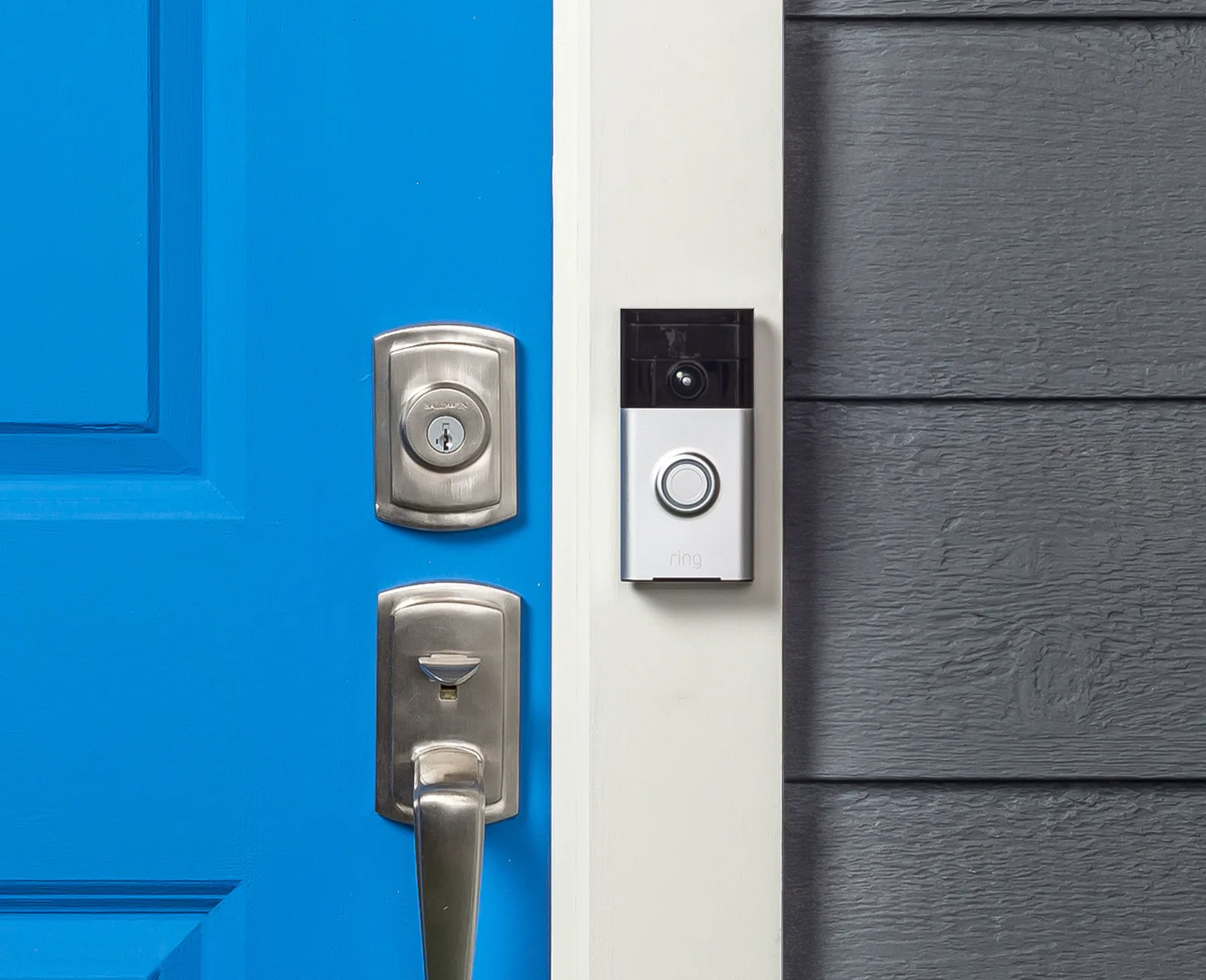
We’re comparing the models you’d actually buy today: the eufy Video Doorbell E340 (eufy’s current dual-camera mainstream model, ~$100–$120) against the Blink Video Doorbell (2nd Gen) (launched August 2025, $69.99). Blink also released 2K+ doorbell variants in 2026, but the Gen 2 remains the mainstream pick — and it’s the fair fight on price.
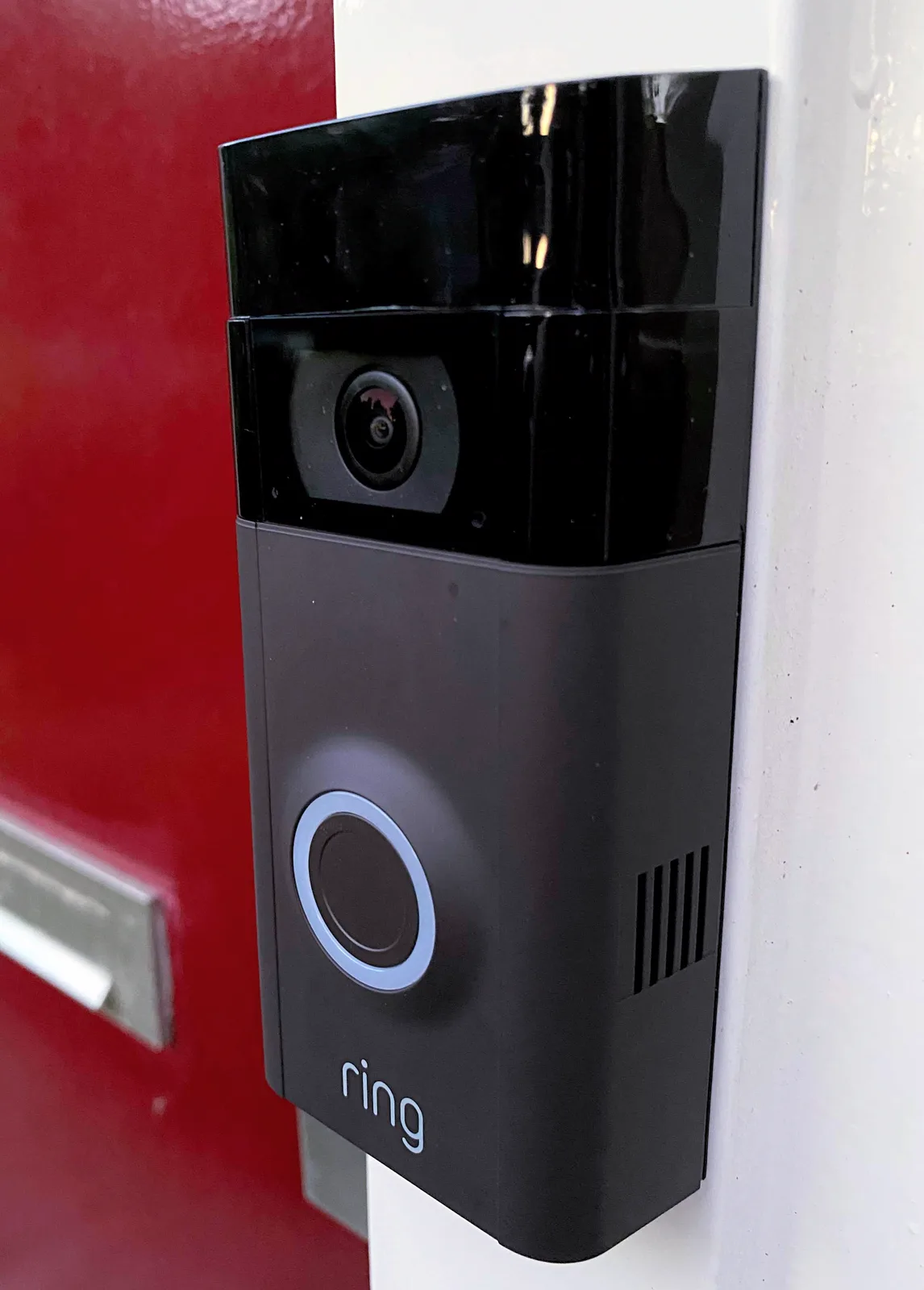
eufy E340: dual 2K cameras (2048×1536 front-facing plus a 1600×1200 downward package camera), color night vision, 6,500mAh rechargeable battery rated up to 6 months, 8GB of built-in local storage, and a wireless chime included in the box with its own microSD slot for expansion. Wi-Fi is 2.4GHz only. Works with Alexa and Google Assistant — not HomeKit. No subscription exists for eufy doorbells, because there’s nothing to subscribe to: detection runs on-device, storage is local.
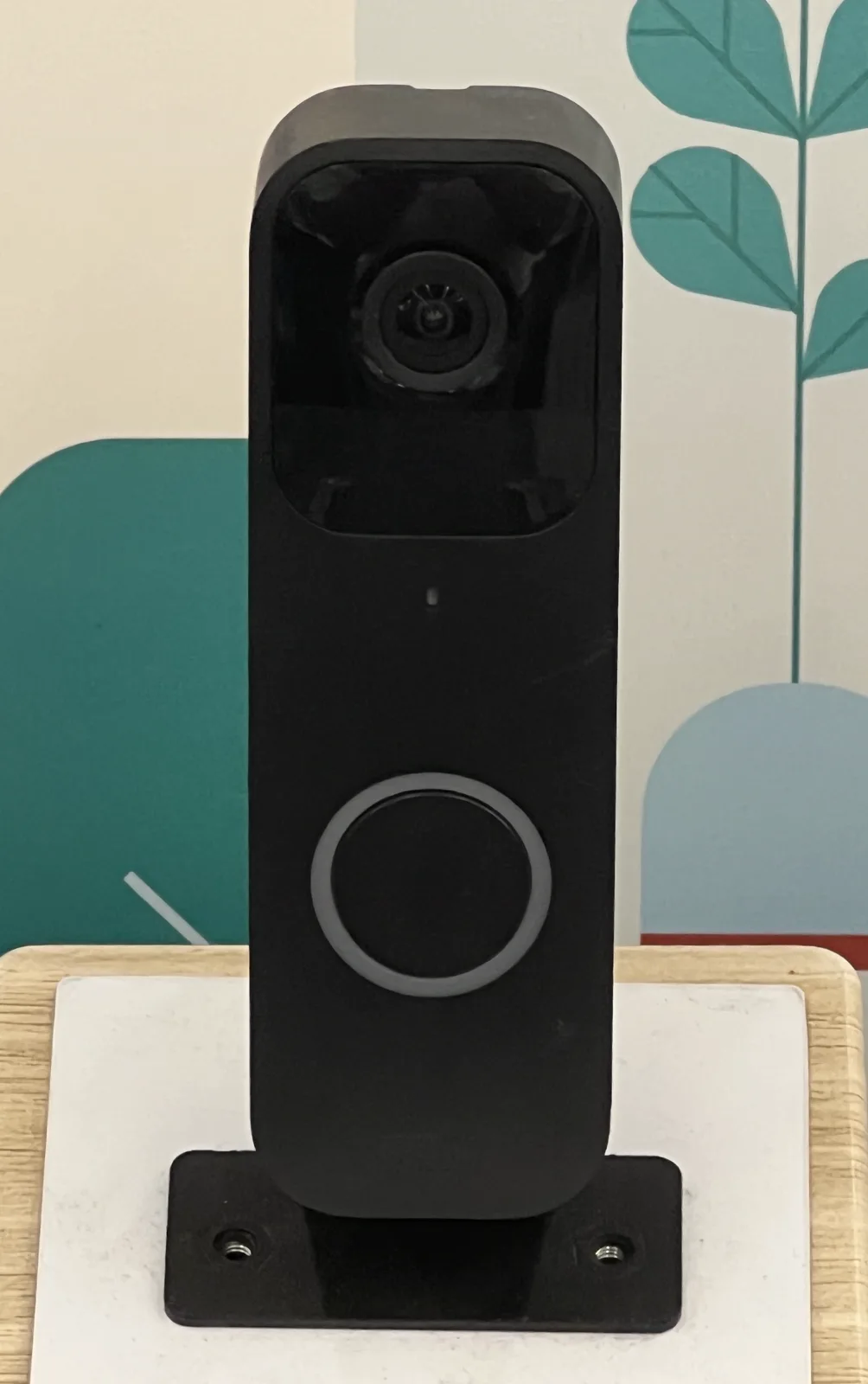
Blink Video Doorbell (2nd Gen): 1440p square (1:1) video at 1440×1440, 150° field of view both horizontal and vertical for head-to-toe coverage, standard IR night vision (no color), and three AA lithium batteries included — rated up to two years, the longest claim in the category. It ships with the Sync Module Core, which connects the doorbell to Wi-Fi but offers no local storage. Alexa only. $69.99 in black or white.
Video quality and field of view: eufy wins on paper and in practice
Resolution first: the E340’s dual 2K setup against Blink’s 1440p square. On raw pixels, eufy wins — 2K front camera versus 1440×1440. But the more interesting difference is what the cameras are pointed at. Blink’s square 1:1 frame with its 150° vertical view does a genuinely good job of the head-to-toe trick: face at the top, packages at the bottom, one sensor. Reviewers consistently call it good for the price — “DVD quality,” as one put it, which sounds like an insult until you remember the price tag.
eufy sidesteps the compromise entirely with two separate cameras: one at face height, one aimed at the doorstep. No single-frame gymnastics, no choosing between the visitor’s face and the parcel. In daylight, the E340’s footage is sharper. At night, it’s not close: eufy’s color night vision (helped by two built-in spotlights) produces identifiable color footage where Blink’s standard IR gives you the classic monochrome ghost.
One honest caveat for eufy: it’s 2.4GHz Wi-Fi only. In a congested apartment building, that can mean slower load times for live view. Blink is also 2.4GHz-only, so neither wins here — but it’s worth knowing before you blame the camera for your router’s problems.
Detection: the subscription wall
This is where the comparison gets lopsided, and where Blink’s “no subscription” marketing starts wobbling.
The E340 detects people and packages on-device, free, forever. Its Delivery Guard feature watches specifically for parcels — it can announce when a package arrives and even (with the chime) deter porch pirates with an automated response. No cloud, no fee, no “premium detection tier.” It just does it.
Blink’s person detection requires a subscription. Without one, you get generic motion alerts — the doorbell tells you something moved, not whether it was a person, a cat, or a bin lorry. Package detection doesn’t exist on Blink at all, at any price. The newer AI tiers ($6.99/month Basic AI) add cloud-based smart descriptions of events, but that’s a paid extra on top of a paid extra.
If your whole reason for buying a doorbell is knowing about deliveries, this section ends the debate. eufy detects packages. Blink can’t, full stop.
Storage and subscription: what “free” actually means
Let’s be precise, because both brands use the word “free” and mean different things.
eufy: 8GB of storage is built into the doorbell itself. Clips live there, viewable in the app, no account tier needed. The included chime has a microSD slot if you want more room, and the E340 can also pair with a eufy HomeBase for expanded indoor storage (which has the nice side benefit of keeping footage inside if someone steals the doorbell). There is no eufy subscription for doorbells. Nothing is paywalled. This is the genuine article.
Blink: without a subscription you get live view (limited to 5-minute sessions), two-way talk, and motion alerts — but no saved video whatsoever. To keep clips, you have two options. Option one: a Blink subscription. The Basic plan ($3.99/month or $39.99/year, one device) adds 60 days of cloud storage, person/vehicle detection, live-view recording, and Blink Moments. The Plus plan ($11.99/month or $119.99/year) covers unlimited devices. Option two: buy a Sync Module 2 (~$40) and plug in your own USB drive (up to 256GB) for local storage with no monthly fee. Note the catch the Gen 2 introduced: the Sync Module Core bundled in the box can’t do local storage — you need the separately-sold Module 2 or XR.
So Blink’s honest no-subscription setup is $69.99 + ~$40 for the Sync Module 2 = ~$110 — at which point you’ve spent eufy money to get fewer features (no package detection, no color night vision, no chime in the box). The subscription path is simpler but never ends: $3.99/month is $96 over two years, on top of the $70 doorbell.
Battery and power: Blink’s one clear win
Credit where it’s due: Blink’s battery story is the best in the business. Three AA lithium batteries, rated up to two years. Even if real-world use halves that — and with heavy motion traffic it might — a year between battery swaps is exceptional. When they do die, you swap in fresh AAs; no waiting for a recharge, no doorbell-shaped hole in your security for six hours.
The E340’s 6,500mAh rechargeable battery is rated up to 6 months, which is respectable but a different league. Recharging means bringing the unit inside for a few hours (it can also run wired to existing doorbell power, with the battery staying installed as backup). Six months is fine — it’s just not two years.
Both can wire to an existing doorbell transformer (Blink: 8–24V AC, which also lets you use your indoor chime). If you’ve got wiring, battery life stops mattering and this section is a tie.
Chime, installation, and the box contents
Small things, big daily difference. The E340 ships with a wireless chime in the box — someone rings, the house rings. It also works with your existing mechanical chime if wired. Blink includes no chime at all. Your options: hear the ring through the app, pair it with an Echo speaker as an announcement chime, or buy a Blink Mini camera to act as one. For a lot of buyers — especially anyone buying for an elderly relative — “no chime in the box” is a genuine annoyance, not a footnote.
Installation is easy on both: battery-powered, app-guided, fifteen minutes with a screwdriver. Blink’s Sync Module Core needs a spot near a power outlet indoors. eufy’s chime needs the same. Renters can mount either without drilling — adhesive mounts and over-door brackets work for both (our no-wiring installation guide covers the options).
App and smart home integrations: check your ecosystem first
This one can end the debate before it starts. Blink works with Alexa. Only Alexa. No Google Home, no HomeKit, no Matter. If your household runs on Google Assistant or Apple Home, the Blink doorbell is a non-starter — buy the eufy.
The E340 works with both Alexa and Google Assistant. It’s not HomeKit-compatible either (eufy’s newer S4 doorbell adds HomeKit via HomeBase 3, if Apple is your world — see our eufy S4 overview). eufy’s newest doorbell, the S4, is now on sale — full specs and no-subscription details. Neither doorbell speaks Matter, which is normal for doorbells in 2026 — cameras only just entered the Matter standard.
App-wise, both are fine and neither is great. eufy’s app is busier (it serves a big product line) but gives you local clip management without a paywall. Blink’s app is simpler, cleaner — and constantly reminding you what a subscription would unlock.
The real cost: two years of ownership
Sticker prices are marketing. Here’s the two-year math with 2026 pricing — the number that actually leaves your bank account:
| eufy E340 | Blink Gen 2 + subscription | Blink Gen 2 + local storage | |
|---|---|---|---|
| Device | ~$100–$120 | $69.99 | $69.99 |
| Storage/subscription | $0 — 8GB built in, no plan exists | $96 — Basic $3.99/mo × 24 (or $80 on annual) | ~$40 — Sync Module 2 + your USB drive |
| Chime | Included | Not included (use Echo or buy Mini) | Not included |
| Person detection | Included, on-device | Included with plan | Not available |
| Package detection | Included, on-device | Not available at any price | Not available |
| 2-year total | ~$100–$120 | ~$150–$166 | ~$110 |
Read that bottom row twice. The $70 doorbell costs $150–$166 over two years once it can actually save video. The $110 doorbell costs $110, forever, with more features. This is the entire comparison in one table.
The verdict: buy the eufy if… / buy the Blink if…
Buy the eufy E340 if: you want the best doorbell under $150, full stop. Package detection matters to you (it should — it’s the reason most people buy doorbells). You refuse subscriptions on principle. You’re on Google Assistant, or you split ecosystems. You want a chime in the box and color night vision.
Buy the Blink Video Doorbell (2nd Gen) if: seventy dollars is the entire budget and it cannot stretch. You’re deep in the Alexa ecosystem and plan to stay there. Battery life is your top priority and you’d genuinely rather swap AAs every year or two than recharge every few months. You already pay for a Blink Plus plan covering other cameras — in which case the doorbell slots into a subscription you’re already buying, and the math changes completely.
That last point deserves emphasis: Blink’s value proposition transforms if you already live in its ecosystem. A second or third Blink device on an existing Plus plan ($11.99/month unlimited) is genuinely cheap. But as a first doorbell, bought alone, the subscription math works against it — which is exactly why our no-subscription security guide and our Arlo vs Ring subscription breakdown both land where they do.
And if you’re still deciding between a doorbell and a camera in the first place, our doorbell vs camera decision framework sorts that out by property type.
FAQ
Does the Blink video doorbell work without a subscription?
Partly. Without a subscription you get live view (5-minute sessions), two-way talk, and motion alerts — but no saved video, no person detection, and no cloud clips. To record video without paying monthly, add a Sync Module 2 (~$40) with a USB drive for local storage. For full features including person detection and 60-day cloud history, the Basic plan is $3.99/month or $39.99/year per device.
Does the eufy E340 require a subscription?
No — and that’s the whole point. Person detection, package detection, and 8GB of built-in local storage all work with no subscription, because no eufy doorbell subscription exists. The included chime has a microSD slot for expansion, and the E340 can pair with a eufy HomeBase for more indoor storage.
Which has better battery life, eufy E340 or Blink?
Blink, by a wide margin — three AA lithium batteries rated up to two years, versus the E340’s rechargeable 6,500mAh battery rated up to 6 months. The trade-off: when Blink’s AAs die you buy new ones; when the eufy needs charging you bring it inside for a few hours. Both can also wire to existing doorbell power.
Does Blink work with Google Home?
No. Blink is Alexa-only — no Google Home, no HomeKit, no Matter. The eufy E340 works with both Alexa and Google Assistant (but not HomeKit). If your home runs on Google, the eufy is the only choice of the two.
Can the Blink doorbell detect packages?
No — Blink offers no package detection at any price, with or without a subscription. The eufy E340 has a dedicated downward-facing package camera with on-device package detection (Delivery Guard) included free. If porch piracy is your worry, this is the deciding feature.
What’s the cheapest way to get video storage on Blink?
A Sync Module 2 (~$40) plus a USB flash drive you already own: one-time cost, no monthly fee, motion clips stored locally. The catch versus a subscription: no person/vehicle detection, no cloud backup, no Blink Moments. Note the Gen 2 ships with the Sync Module Core, which can’t do local storage — the Module 2 or XR is a separate purchase.
Sources
- eufy (official): Best Video Doorbell UK 2026 — E340 specs: dual 2K cameras, 6500mAh battery, 8GB local storage, no monthly fees
- The Gadgeteer (Oct 7, 2026): eufy S4 video doorbell overview — E340 at $99.99 standalone (Oct 2026), 2.4GHz Wi-Fi, no HomeKit
- VideoDoorbell.uk (2026): eufy Video Doorbell S4 review — E340 vs S4 spec comparison: pricing, storage, Wi-Fi, subscription (none on either)
- Phandroid (Sep 28, 2026): Best Video Doorbell Cameras 2026 — E340 at $119.99, 8GB local storage, no paid cloud needed
- HomeCamCafe (2026): Blink Subscription Plans Explained (2026) — Basic $3.99/mo or $39.99/yr (1 device); Plus $11.99/mo or $119.99/yr; AI tiers $6.99/$19.99; local storage via Sync Module 2/XR
- Amazon (official plan listing): Blink Basic Plan — $3.99/month or $39.99/year, 60-day cloud storage, local storage via Sync Module 2/XR without plan
- DumbSwitches: Blink Sync Module 2: What It Does — ~$40, USB up to 256GB local storage, no subscription required for local clips
- Android Police (2026): Blink’s latest 2K video doorbells — 2K+ wired ($50) and battery models; subscription needed for person/vehicle detection and cloud storage
Bottom line: the eufy E340 is the better doorbell, and the two-year math proves it. The Blink is the cheaper experiment. Buy the experiment only if you’re sure it’s all you need — because the subscription has a way of becoming the product.



3 Comments