

Best Video Doorbells Without a Subscription (2026): Local Storage Compared
The best video doorbell without a subscription is the eufy Video Doorbell E340 — it records to 8 GB of built-in storage with no cloud plan at any tier, because eufy simply doesn’t sell a subscription for it. If you want expandable storage, get the Reolink Video Doorbell Battery (2nd Gen) (microSD up to 512 GB); on the tightest budget, the Blink Battery Doorbell 2K+ records locally with no monthly fee — though you’ll need a Sync Module 2, sold separately, to unlock local storage.
This guide is part of our broader look at home security without a subscription. Below: what “no subscription” actually means for each doorbell, the true 3-year cost with current 2026 plan prices, and a spec table built from manufacturer pages — not marketing copy.
Key Takeaways
- Best overall: eufy Video Doorbell E340 (~$149.99) — dual cameras, 8 GB onboard storage, and literally no subscription to buy. The only doorbell here where “$0/month” isn’t a limited free tier.
- Best storage flexibility: Reolink Video Doorbell Battery (2nd Gen) (~$149.99) — microSD up to 512 GB, on-device AI detection free, no hub required.
- Best budget: Blink Battery Doorbell 2K+ (~$79.99, often on sale) — local clips to a USB drive with no plan, but the included Sync Module Core can’t do local storage: that needs a Sync Module 2 (~$35, sold separately), and person detection plus cloud history sit behind a subscription.
- The trap to understand: Ring’s Battery Doorbell (2nd Gen) (~$99.99 MSRP, often promo’d lower) records nothing without a Ring Home plan — live view works, but zero saved video. Nest’s battery doorbell gives you 3 free hours of event history, then wants Google Home Premium.
- 3-year real cost: a $149.99 Eufy (or Reolink) costs $149.99 over three years. A $99.99 Ring plus Ring Home Solo costs ~$280 — the subscription is the product’s real price.
Disclosure: This article currently contains no affiliate links — nothing here earns us a commission. If that changes, we’ll say so.
What does “no subscription” actually mean?
“No subscription” covers three very different realities, and most roundups blur them together:
- Truly subscription-free — no paid plan exists or nothing meaningful sits behind one. (Eufy E340, Reolink.)
- Free tier + paid unlocks — core recording works free, but smarter features or longer history cost monthly. (Blink: local clips free with a Sync Module 2, person detection paid. Nest: 3 free hours, then paid.)
- Subscription-required for recording — the doorbell is a live-viewer without a plan. (Ring: no plan = no saved video at all.)
This guide ranks doorbells by how close they are to category 1 — because that’s what you’re actually searching for.

True cost compared: what 3 years really costs
Upfront prices are the marketing; the subscription is the price. Here’s the honest math (hardware prices checked 2026-09-30; plan prices: Ring Home Solo $4.99/mo, Google Home Premium Standard $10/mo — both re-verified 2026-09-30):
| Doorbell | Upfront (approx) | Subscription over 3 years | 3-year total |
|---|---|---|---|
| eufy Video Doorbell E340 | $149.99 | $0 — no plan exists | $149.99 |
| Reolink Video Doorbell Battery (2nd Gen) | $149.99 | $0 — no plan required | $149.99 |
| Blink Battery Doorbell 2K+ | ~$79.99 (often on sale) | $0 with local USB storage | ~$115–$130 (doorbell + ~$35 Sync Module 2 + USB drive) |
| Wyze Video Doorbell v2 | $59.98 | $0 with microSD local recording | $59.98 |
| Ring Battery Doorbell (2nd Gen) | $99.99 | 36 × Ring Home Solo ($4.99/mo) = $179.64 | $279.63 |
| Google Nest Doorbell (battery) | $199.99 | 36 × Google Home Premium Standard ($10/mo) = $360 | $559.99 |
The pattern: the cheapest doorbell to buy is rarely the cheapest to own. A $99.99 Ring with a plan costs nearly double over three years what the $149.99 Eufy costs — and the Eufy never asks for another dollar.

For a paid-plan comparison, see is Arlo Secure worth it.
Specs at a glance
Every figure below comes from the manufacturer’s official spec page (checked 2026-09-30). Where the manufacturer doesn’t state a figure, we say so instead of guessing.
| eufy E340 | Reolink Battery (2nd Gen) | Blink Battery Doorbell 2K+ | Wyze v2 | Nest Doorbell (battery) | Ring Battery Doorbell (2nd Gen) | |
|---|---|---|---|---|---|---|
| Resolution | 2K | 2K (2048×2048) | 2K (1920×1920) | 2K (2048×1536) | 960p HDR (960×1280) | 2K (6x zoom) |
| Field of view | 160° | 150° H / 150° V / 180° diag. | 140° | 135° H / 166.8° diag. | 145° diag. | Not published by Ring |
| Power | Battery or wired | Battery or wired | 3× AA lithium (non-rechargeable) | Wired only | Battery or wired | Battery or wired |
| Local storage | 8 GB built-in (~90 days) | microSD up to 512 GB | USB drive via Sync Module 2 (sold separately — included Sync Module Core can’t do local storage) | microSD up to 256 GB | None (cloud only) | None (cloud only) |
| Records with $0/month? | Yes — everything | Yes — event clips | Yes — local clips (with Sync Module 2) | Yes — with microSD | 3 hrs event history only | No — nothing saved |
| Approx. price | $149.99 | $149.99 | ~$79.99 | $59.98 | $199.99 | $99.99 |
For retention details, see eufy video retention by model.
Our picks
Best overall: eufy Video Doorbell E340
The E340 is the only doorbell in this guide with no subscription tier at all — there’s simply nothing to buy. The dual-camera design (2K front camera plus a downward package camera) covers visitors and parcels in one unit, and everything — live view, motion alerts, event recording to the 8 GB onboard storage, two-way talk, color night vision, and on-device AI detection for people, packages, and faces — works with no plan. Eufy’s own FAQ estimates the 8 GB holds roughly 90 days of typical event clips. It runs on battery or existing doorbell wiring, and works standalone with no hub (it can optionally pair with a HomeBase for expanded storage).
The honest limitations: the 8 GB can’t be expanded without buying into eufy’s HomeBase system, there’s no Apple HomeKit support (Alexa and Google Assistant only), and reviewers note heavy image processing in low light. It also connects over 2.4 GHz Wi-Fi only.

For the wider eufy ecosystem, see our Eufy vs Arlo video doorbell comparison.
Best storage flexibility: Reolink Video Doorbell Battery (2nd Gen)
Reolink’s pitch is simple: a microSD slot (up to 512 GB) and no subscription required for core functions — live view, two-way audio, motion alerts, local playback, and on-device person/vehicle/animal/package detection all work free, with free push notifications. No hub is required. The 2048×2048 square sensor gives a true head-to-toe 180° diagonal view, and dual-band Wi-Fi (2.4 + 5 GHz) is a genuine advantage over the 2.4 GHz-only crowd. Reolink claims up to 10 months per charge (based on 5 minutes of daily recording); wire it to 16–24V and you unlock 24/7 continuous recording.
The honest limitations: that battery claim is hard to hit on a busy street — one detailed owner review reported roughly a month before recharging with high sensitivity — and there’s a noticeable wake-up lag on battery, so a delivery driver can be gone before live view connects. No HomeKit here either.
Best budget: Blink Battery Doorbell 2K+
Blink is the price disruptor: a 2K square-sensor doorbell that has sold for as little as ~$36 on promotion (list ~$79.99), running on three AA lithium batteries Blink rates for up to two years. To store clips locally with no monthly fee, add a Sync Module 2 (USB drive, sold separately — ~$35): Amazon’s own listing confirms no monthly fees are required for local video storage with Sync Module 2.
The important catch: the 2K+ ships with a Sync Module Core in the box — and per Blink’s own support FAQ, the Sync Module Core does not support local storage. Don’t assume the included module gives you subscription-free recording. The Sync Module 2 (or Sync Module XR) is the separate purchase that unlocks it.
The honest limitations are where the “budget” shows: person detection, cloud history, and live-view recording all sit behind the Blink subscription, the app is no-frills next to Ring or Arlo, and the batteries are non-rechargeable AAs you replace rather than recharge (one tester got ~14 months real-world, not two years). The included Sync Module Core is required for the doorbell to function at all, and the USB drive is sold separately.
Best budget wired: Wyze Video Doorbell v2
If you have existing doorbell wiring, the Wyze v2 is the value king: 2K resolution, a microSD slot (up to 256 GB) with 24/7 continuous local recording, and a $59.98 price tag. No subscription is needed for the local recording.
The honest limitations are significant, though: it’s wired-only — no battery option, so renters and homes without doorbell wiring are out. And without a plan, cloud event clips are limited to 12-second videos on doorbell press only; other motion events generate just a snapshot (the microSD covers the video gap locally). Person and package detection require Cam Plus. Reviewers also flag an awkwardly placed microSD slot behind the wall mount.
Best free smart alerts: Google Nest Doorbell (battery)
Nest takes a different approach: no local storage at all — it’s cloud-only — but the free tier is genuinely useful. Without paying, you get 3 hours of event video history plus intelligent alerts free: on-device machine learning distinguishes people, packages, animals, and vehicles with no plan. That’s the best free AI detection of any doorbell here. It runs on battery or wired, with a head-to-toe 3:4 portrait view.
The honest limitations: 3 hours is the stingiest free history in this guide, the 960p sensor is the lowest resolution here, night vision is black-and-white IR only, and anything beyond the free tier means Google Home Premium Standard ($10/mo or $100/yr — the rebranded Nest Aware). There’s no 24/7 recording on the battery model at all, and recharging means removing the whole doorbell from its mount.
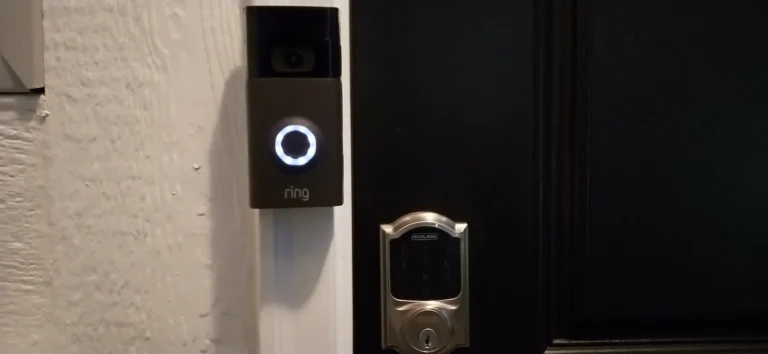
The subscription trap: Ring Battery Doorbell (2nd Gen)
We include Ring not as a pick but as the cautionary example — because it’s the doorbell most buyers assume works like the others. It doesn’t. Ring’s official FAQ is explicit: without a Ring Home plan, live view, two-way talk, and motion notifications work, but nothing is recorded or saved. No event history, no clips, no photos. Person and package detection, video sharing, and quick replies all require the plan (a 30-day trial is included).
At $99.99 MSRP (frequently discounted — recently as low as $39.99 on Amazon) with 2K video and 6x zoom, the hardware is fine — PCWorld’s main complaint is that it’s “essentially useless as a security camera” without the subscription, and recharging means detaching the whole unit (the base 2nd Gen has no quick-release battery — only the Plus does). Note: Ring refreshed the lineup in March 2026 — the entry model is now the Battery Doorbell (2nd Gen), with the Battery Doorbell Plus (2nd Gen) and Battery Doorbell Pro (2nd Gen) above it.
We’ve documented exactly what a Ring doorbell can and can’t do without a subscription if you already own one.
For a wired option, see Reolink’s no-subscription PoE doorbell.
Also on our radar
- TP-Link Tapo D235 — Trusted Reviews’ overall top doorbell pick: 2K, microSD recording, no subscription, huge battery. We didn’t deep-dive it here because we have no affiliate path for Tapo, but it’s a legitimate contender on merit.
- Aqara Doorbell Camera Hub G410 — microSD storage in the indoor chime-hub, doubles as a Matter controller and Thread border router. A favorite of UK roundups; newer to the US market.
- AOSU 5MP — a newer challenger with 8 GB built-in storage and head-to-toe 166° view, getting genuine reviewer attention in 2026 roundups.
How to choose
Do I need existing doorbell wiring?
No — unless you pick the Wyze v2, which is wired-only. The Eufy E340, Reolink Battery, Blink 2K+, Ring, and Nest all run on battery, with optional wiring for trickle charging. If you have no wiring at all, see our guide to installing a video doorbell without existing wiring.
How does local storage actually work?
Four different designs: built-in (Eufy E340’s 8 GB — nothing to buy, nothing to expand), microSD slot (Reolink up to 512 GB, Wyze up to 256 GB — cheap and expandable, card sold separately), module + USB (Blink’s Sync Module 2, ~$35 sold separately — the included Sync Module Core can’t do local storage; USB drive extra), and none (Ring and Nest are cloud-only). For renters, built-in or microSD is simplest — no extra hardware on the wall.
What do I lose without a subscription?
Depends on the doorbell. With Eufy and Reolink: nothing meaningful. With Blink: person detection and cloud history (local recording still works with a Sync Module 2). With Wyze: AI detection and cloud event videos (local recording still works). With Nest: everything beyond 3 hours of history. With Ring: literally all recording. Always check the “without subscription” column before assuming.
How long do batteries actually last?
Manufacturer claims assume light traffic — real life is shorter, especially on busy streets or in cold weather. Eufy gives no official months figure; Reolink claims up to 10 months (owners report far less on busy doors); Blink claims up to 2 years on AAs (testers saw ~14 months); Google gives no figure for Nest (reviewers report ~2.5–3 months). For the full picture, see how Ring and Nest compare on battery life.
For a security reality check, see the latest smart home security flaws.
Our research method
We didn’t lab-test these doorbells, and we won’t pretend we did. Our method: every spec in our tables comes from the manufacturer’s official spec page; US prices were checked on 2026-09-30; subscription terms come from the brands’ official plan pages; and limitations are cross-checked against named reputable reviewers (Digital Camera World, The Ambient, PCWorld, Android Police, Tom’s Guide, TechRadar, and owner communities). Plan pricing (Ring Home Solo $4.99/mo, Google Home Premium Standard $10/mo) was verified against official plan pages on 2026-09-30. Ring’s March 2026 lineup refresh (Battery Doorbell 2nd Gen / Plus / Pro) was verified against Ring announcements and retailer listings on 2026-09-30.
Frequently asked questions
Do video doorbells work without a subscription?
Yes — but “work” means different things. Eufy and Reolink doorbells record and alert fully with no plan. Blink and Wyze record locally free but keep AI features behind plans. Nest gives 3 free hours of event history. Ring saves nothing without Ring Home. Check the specific model, not the brand.
Where is footage stored if there’s no subscription?
On the device itself: built-in memory (Eufy E340’s 8 GB), a microSD card you supply (Reolink, Wyze), or a module with a USB drive (Blink’s Sync Module 2, sold separately). Ring and Nest have no local storage option — their footage lives in the cloud, which is why the subscription exists.
Can I use a Ring doorbell with no monthly plan?
You can answer the door and watch live, but nothing is recorded — no event clips, no history, no saved video. If recording matters, Ring requires Ring Home. Our full breakdown covers what a Ring doorbell can and can’t do without a subscription.
What’s the catch with “no subscription” doorbells?
Three usual catches: higher upfront prices (the Eufy costs more than a Ring), finite local storage (8 GB fills up; microSD cards are cheap but sold separately), and AI features that rivals put behind paywalls (Eufy and Reolink include basic detection free; Blink and Wyze charge). None of these are dealbreakers — they’re just the trade.
Do I need doorbell wiring for these?
Only the Wyze v2 requires it. Every other pick here runs on battery, with optional wiring for trickle charging. Battery models are the renter-friendly choice — no electrician, no landlord negotiations.
How long does local storage last before overwriting?
Eufy estimates ~90 days of typical event clips on the E340’s 8 GB. A 256 GB microSD card in the Wyze v2 holds weeks of continuous recording; Reolink’s 512 GB ceiling is the largest here. All of them loop-record — oldest footage overwrites automatically when full.
Are no-subscription doorbells good for renters?
The battery models are ideal for renters: no wiring changes, no drilling into the landlord’s doorframe (most use adhesive or clamp mounts), and no subscription to cancel when you move. The Eufy E340 and Blink 2K+ are the simplest renter picks since they need no hub or wiring at all.
Your next step
Pick your constraint first: no wiring → Eufy E340 or Blink 2K+; have wiring, tight budget → Wyze v2; want maximum storage → Reolink Battery with a big microSD card; deep in Google Home → Nest Battery (accept the 3-hour free window). Then read what a Ring doorbell can and can’t do without a subscription if you’re cross-shopping Ring — it’s the one where the subscription math matters most. If you’re open to paying for a subscription after all, our SimpliSafe Video Doorbell Series 2 breakdown runs the real 3-year price math on the subscription route.
First published 2026-09-30. Prices and subscription terms re-verified 2026-09-30.




5 Comments