Eufy vs Arlo Without a Subscription: Which Is Actually Cheaper in 2026?
Eufy is the cheaper no-subscription system: a 2-camera eufyCam 3C kit costs $469.99 total with no ongoing fees, while Arlo’s 2-camera setup reaches $847.62 over three years with a plan — and records nothing without one.
Published 28 September 2026 · Updated 28 September 2026
AbodeAlly Editorial Team
Disclosure: This article currently contains no affiliate links — nothing here earns us a commission. If that changes, we’ll say so.
Key Takeaways
- Eufy is the cheaper no-subscription system: a 2-camera eufyCam 3C kit costs $469.99 total with no ongoing fees.
- Arlo’s 2-camera setup reaches $847.62 over three years with Smart Aware Unlimited — and records nothing without a plan.
- Eufy includes 4K local recording, on-device AI detection, and activity zones free; Arlo gates all three behind a subscription.
- Arlo hardware is cheaper upfront (~$99.99/camera) with better app polish, but the plan costs more than the camera within three years.
- Both work for renters; Eufy’s wireless HomeBase moves with you, while Arlo’s plan follows you too.
The 60-second verdict
No subscription, ever: Eufy wins. Every eufyCam and indoor camera records locally with full features — AI detection, activity zones, and video history — for $0/year. Nothing about the camera changes if you never pay a cent. Wondering how long that local storage actually lasts? See our breakdown of how long Eufy local storage lasts by model.
Tightest hardware budget: Arlo Essential 2K (about $99.99 per camera) is cheaper to buy than eufyCam kits — but only if you accept that without a plan, it records nothing.
Apple Home: Arlo edges it — Arlo lists Apple Home support on select models (we could not verify HomeKit Secure Video on the current lineup — check the exact model before buying); most Eufy cameras still don’t list HomeKit support, though Eufy’s Sept 2026 Edge 5.0 range adds Apple Home compatibility on new models.
Bottom line: If “no subscription” means the camera still records and detects people, Eufy is the strongest answer — and Reolink and Tapo also fit that bill at lower prices. If it means I just want cheap hardware and I’ll deal with the plan later, Arlo’s entry price is lower — but the plan will cost more than the camera within three years.
Eufy vs Arlo: no-subscription comparison

| Eufy (eufyCam 3C) | Arlo (Essential 2K, 2nd Gen) | |
|---|---|---|
| Typical hardware price | $469.99 list (~$256 typical street; 2-camera kit incl. HomeBase 3) | $99.99 per camera |
| Resolution | 4K (3840×2160) | 2K (2560×1440) |
| Subscription required for recording? | No | Yes — Arlo Smart Aware |
| Local storage included | Yes — 16GB built into HomeBase 3 (~90 days, 1 camera) | Only with $99.99 SmartHub + USB drive |
| AI detection without subscription | Yes (person, vehicle, pet — on-device) | No — basic motion alerts only |
| Activity zones without subscription | Yes | No |
| Video history without subscription | Yes (local) | None — live view only |
| Cloud option | Optional paid Cloud Backup add-on | 60 days with Arlo Smart Aware |
| Arlo Smart Aware plan cost | — | $9.99/mo single cam; $19.99/mo unlimited |
| Works with | Alexa, Google Assistant | Alexa, Google Assistant, Apple Home (select models) |
Sources: eufy.com product specs; Best Buy eufyCam 3 Q&A (eufy team answers); security.org Arlo review; Tom’s Guide storage plan comparison.
How the two subscription models actually differ
Eufy’s model is simple: there is no required subscription. Buy the hardware, and everything works — recording, AI detection, notifications, video history — stored locally on the HomeBase or a microSD card. Eufy does sell an optional Cloud Backup add-on (roughly $3–4/month per device or ~$14/month for unlimited devices, 30 days of history) for off-site copies, but no core feature depends on it. The trade-off of local-first storage: footage normally stays on your own hardware, which is a privacy win, but there’s no off-site backup if the hardware is stolen unless you add Cloud Backup.
Arlo’s model is hardware-as-a-gateway. The cameras are well-built and genuinely good — 2K HDR, solid app, fast alerts — but recording, AI detection, activity zones, and rich notifications all sit behind Arlo Smart Aware. In 2025 Arlo restructured its plans, and on Sept 15, 2026 it renamed the tiers (older articles still say “Arlo Secure”): Arlo Smart Aware (formerly Arlo Plus) and Arlo Smart Secure (formerly Arlo Premium):
- Arlo Smart Aware — single camera: $9.99/month or $95.88/year
- Arlo Smart Aware — unlimited cameras: $19.99/month or $215.88/year
- Arlo Smart Secure — unlimited cameras: $29.99/month or $299.88/year (adds 24/7 professional monitoring and cellular/battery backup)
All paid tiers include 60 days of cloud video history — comfortably above the industry standard of 30. The price history is worth knowing: the cheapest Arlo plan was $2.99/month, then $4.99, then $7.99, and now $9.99 under the Plus branding (renamed Arlo Smart Aware on Sept 15, 2026). The camera on your wall didn’t change; the rent did.
Why this comparison exists: Arlo’s price-hike timeline
To understand why “eufy vs arlo no subscription” is one of the most searched comparisons in smart home tech, follow the money:
- ~2022: Arlo’s entry plan cost $2.99/month for a single camera. At that price, most owners shrugged and paid.
- 2023: Raised to $4.99/month — a 67% increase. Grumbling began; the hardware hadn’t changed.
- 2024: Raised to $7.99/month — another 60% jump. Owner forums filled with cancellation threads.
- 2025: Plans restructured and rebranded as Arlo Plus at $9.99/month ($95.88/year) — renamed Arlo Smart Aware on Sept 15, 2026. The cheapest way to use an Arlo camera has more than tripled in about three years.
Each increase followed the same playbook: the free tier got thinner (the old 7-day free cloud history on newer models: gone), and more features moved behind the paywall. This isn’t an Arlo villain story — it’s the economics of every cloud-camera business. Subscriptions are annuities, and annuities have to grow: raise the price, narrow the free tier, or both.
Eufy’s pitch lands precisely because of this timeline. Every Arlo price hike is a marketing event Eufy didn’t have to pay for — and it’s why no-subscription searchers arrive already skeptical. If you’re one of them, the 3-year cost table below is the only math that matters.
What Eufy gets you for $0/year
With a eufyCam 3C kit ($469.99 list, often ~$256 street, for two cameras plus HomeBase 3 ):
- 4K recording stored on the HomeBase’s built-in 16GB — eufy rates this at roughly 90 days for a single camera under normal use
- On-device AI — person, vehicle, and pet detection run on the HomeBase, not in the cloud, so they work with no ongoing cost
- Expandable storage — pop in a 2.5-inch SATA HDD or SSD (up to 16TB) if you run multiple cameras
- Battery life — up to 6 months per charge on the 3C (the step-up eufyCam 3 claims a year with its solar panel)
Indoor options are even cheaper to start: the Indoor Cam C120 (2K, ~$50) and Indoor Cam S350 (4K dual-lens, ~$129) record to a microSD card up to 128GB with no hub and no fees.
The honest caveats: reviewers and owners commonly report that Eufy’s app is less polished than Arlo’s and that notification speed can lag, and the brand is still answering for a 2022 privacy incident in which researchers found camera thumbnails uploading to cloud servers despite “local only” marketing. Eufy has since tightened encryption and published more about its security practices — but if the 2022 story bothers you, it’s a legitimate reason to lean Arlo. One more awareness note: around Sept 19, 2026, NEC Corp sued Anker/eufy for alleged patent infringement (Bloomberg Tax) — it’s a patent dispute, not a privacy incident, and no equivalent privacy issue has surfaced publicly.
What Arlo gets you — and what the plan really costs
Arlo’s hardware is consistently top-rated at its price points. The Essential 2K (2nd Gen) at ~$99.99 delivers sharp 2K HDR video, a spotlight, color night vision, and an app reviewers consistently praise. Arlo has since launched the Essential Solar at the same $99.99 — with an integrated solar panel but the same subscription math. Setup takes minutes; it connects straight to Wi-Fi with no hub.
But here’s the part the box doesn’t emphasize: on newer Arlo cameras, there is no free cloud recording at all. Cancel or skip the plan and you get live view, basic motion alerts (no preview thumbnails), and two-way audio — and nothing else. No clips saved anywhere. Arlo’s own community moderators confirm it: without a subscription you “only retain basic notifications and live viewing.”
There is a local workaround, and it’s worth pricing honestly: the Arlo SmartHub (VMB4540, $99.99) accepts a USB drive for local recording. But even then you lose AI detection and activity zones (those need the plan), local footage isn’t encrypted, and remote viewing through the app can be unreliable when the hub is offline. The Arlo Video Doorbell 2nd Gen can now record locally too — since late 2024 it pairs with the SmartHub VMB4540/VMB5000 for subscription-free local recording.
For the plan’s value, see whether Arlo Secure is worth paying for.
3-year total cost of ownership
This is the math that matters. Hardware prices are typical US street prices; plan prices are Arlo’s published annual rates.

| System | Hardware | 3 years of plan | 3-year total |
|---|---|---|---|
| Eufy: eufyCam 3C 2-cam kit | $469.99 | $0 | $469.99 |
| Arlo: 2× Essential 2K, no plan | $199.98 | $0 | $199.98 — records nothing |
| Arlo: 2× Essential 2K + Smart Aware Unlimited (annual) | $199.98 | $647.64 | $847.62 |
| Eufy: Video Doorbell E340 | $149.99 | $0 | $149.99 |
| Arlo: Video Doorbell 2K (2nd Gen) + Smart Aware Single (annual) | $129.99 | $287.64 | $417.63 |
Two cameras over three years: Eufy costs $469.99 total. Arlo with the features that make it worth owning costs $847.62. The subscription costs more than the hardware — and it never stops.
Note: the Arlo doorbell is frequently discounted (seen at $64.99); hardware sale prices shift the math but not the conclusion — the plan is the dominant cost.
What breaks when you cancel: Eufy vs Arlo
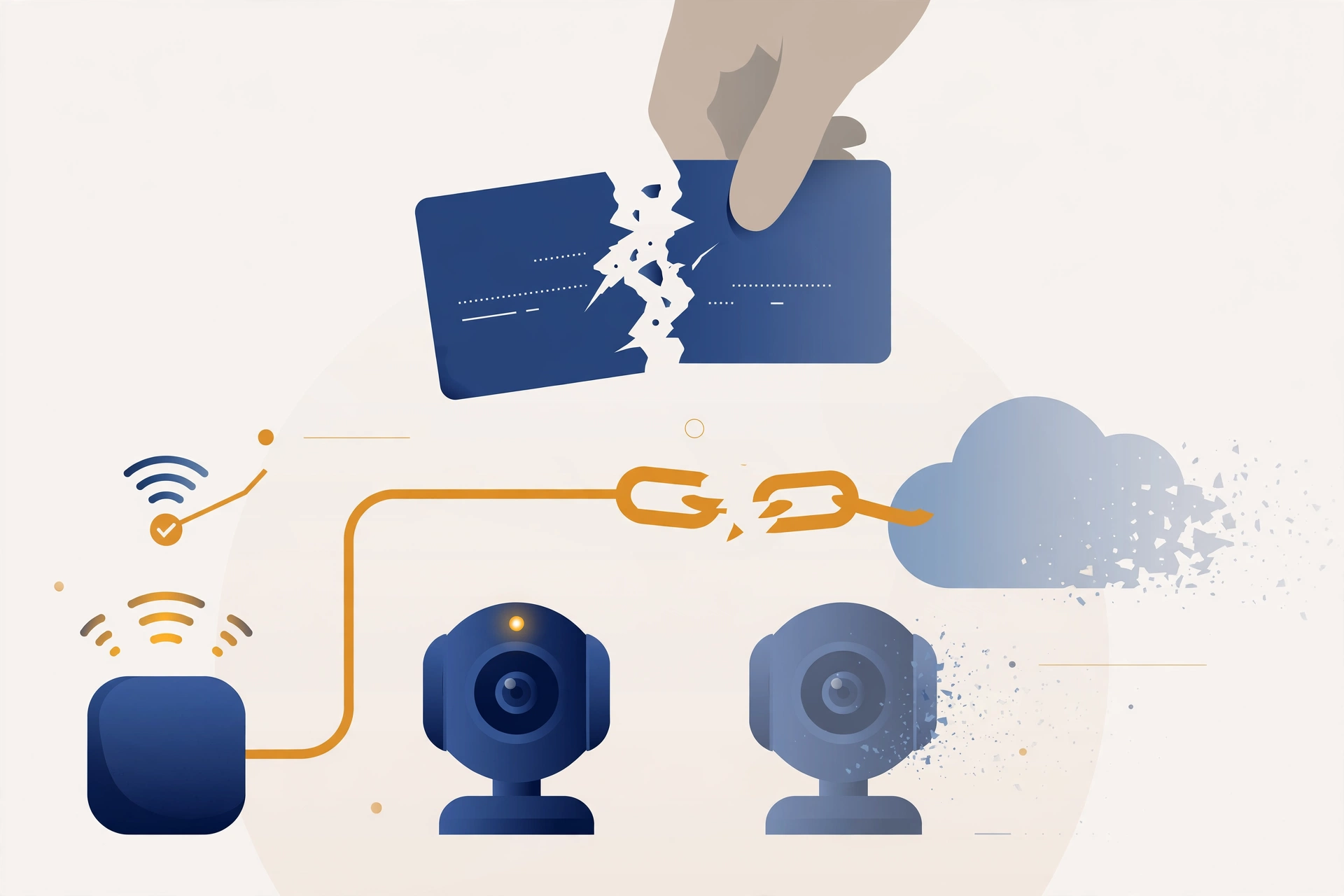
Our signature matrix. This is what each system looks like the day after you cancel (or never subscribe):
| Feature | Eufy (no subscription) | Arlo (no subscription) |
|---|---|---|
| Live view | ✅ Works | ✅ Works |
| Motion alerts | ✅ Works (with AI labels) | ⚠️ Basic alerts only — no preview, no person/vehicle labels |
| Video recording | ✅ Works (local) | ❌ Nothing records |
| Video history | ✅ ~90 days local (1 cam) | ❌ None |
| Person/vehicle/package detection | ✅ Works (on-device AI) | ❌ Requires plan |
| Activity zones | ✅ Works | ❌ Requires plan |
| Two-way audio | ✅ Works | ✅ Works |
| Remote viewing | ✅ Works (via app) | ✅ Live view only |
| Cloud backup | ⚠️ Optional paid add-on | ❌ Requires plan |
Renter notes
- Eufy: battery cameras + wireless HomeBase = no drilling, no wiring, everything moves with you. The Indoor Cam C120 is the cheapest no-trace option.
- Arlo: Essential cameras are equally renter-friendly to install — but remember the plan follows you too. If your lease situation is temporary, Eufy’s zero ongoing cost is the safer bet.
Frequently asked questions
Is Eufy really free forever?
Yes, for all core features. There is no Eufy subscription to cancel because none is required. The only “ongoing cost” is optional: a hard drive if you want more than the built-in 16GB of local storage.
Can I use Arlo cameras with just the free trial?
New Arlo cameras typically include a trial of Arlo Smart Aware (commonly 1 month, sometimes longer on bundles). After it expires, recording and smart features stop unless you subscribe.
Which has better video quality?
At the price points compared here, Eufy’s 4K (eufyCam 3C) out-resolves Arlo’s 2K Essential. Arlo’s premium lines (Pro 2K 6th Gen, Ultra 4K 3rd Gen) close the gap, but they cost more and still need the plan.
Does either work with HomeKit?
Arlo lists Apple Home support on select models, but we could not verify HomeKit Secure Video on the current lineup — verify the exact model before buying. Most Eufy cameras do not currently list HomeKit support. Freshness note (Sept 2026): Eufy unveiled its Edge 5.0 range — the TrackLight Cam S1 and Video Doorbell S4 will be Apple Home compatible, a first for current Eufy cameras. If you’re deep in the Apple ecosystem, verify the exact model before buying.
What about Wyze, Reolink, and Tapo?
They’re strong no-subscription alternatives — often cheaper than both Eufy and Arlo. We compare them in our upcoming no-subscription hub. Reolink in particular pairs local recording with no fees at aggressive prices.
The bottom line
Buy Eufy if you want a security camera that works like you own it — because you do. Buy Arlo if you value a consistently top-rated app and video experience and accept that the subscription is part of the price. Just don’t buy Arlo thinking you’ll skip the plan: a camera that can’t record is a very expensive live-view toy.
Your next step
- Home Security Without a Subscription (2026): The Complete Guide — Go deeper with the complete no-subscription guide.
- Does Arlo Work Without a Subscription? (2026) — The full Arlo breakdown behind the comparison.
- Do Eufy Cameras Require a Subscription? (Every Model, 2026) — The full Eufy breakdown behind the comparison.
Recent updates
- 28 September 2026 — Restructured with Key Takeaways, quick list and FAQ; re-verified specs and prices.
Why you can trust AbodeAlly
AbodeAlly is a research-based buying guide, not a test lab. We don’t run a warehouse of gadgets or a lab bench, so we never invent hands-on test results.
Every pick starts with manufacturer specifications and standards documents, cross-checked against reputable expert reviews and long-term owner feedback. We re-verify specs and prices on a regular update cadence, and each article carries a dated changelog so you can see exactly what changed and when.
Spot an error or an out-of-date price? Tell us and we’ll fix it — corrections are published openly, not buried.
AbodeAlly’s editorial team researches smart-home gear full time. We verify specifications against manufacturer and standards sources, cross-check reputable expert reviews and long-term owner feedback, and re-verify every guide on a regular cadence. We don’t run a test lab, so we never invent hands-on test results.


6 Comments