

Do Eufy Cameras Require a Subscription? (Every Model, 2026)
No — Eufy cameras work fully without a subscription. Every model records locally with AI detection and remote viewing included; only optional off-site cloud backup costs extra.
Published 28 September 2026 · Updated 28 September 2026
AbodeAlly Editorial Team
Disclosure: This article currently contains no affiliate links — nothing here earns us a commission. If that changes, we’ll say so.
Key Takeaways
- No Eufy camera requires a subscription — recording, AI detection, activity zones and remote viewing are all included free.
- Every model records locally: eufyCam via HomeBase 3 (16GB + SATA expansion), SoloCam via built-in storage, Indoor/Doorbell/Floodlight via microSD or onboard storage.
- The only paid extra is optional Cloud Backup (~$3–4/month per device) for off-site redundancy — no feature is gated behind it.
- When local storage fills, oldest clips auto-overwrite; expand HomeBase 3 with a 2.5-inch SATA drive (up to 16TB) for years of retention.
- The 2022 privacy incident was real, but Eufy has since added encryption transparency — local-first remains a privacy advantage over cloud brands.
No. Eufy cameras do not require a subscription — not for recording, not for AI detection, not for video history.
Every Eufy security camera records locally — to a HomeBase, built-in storage, or a microSD card — with full features and zero monthly fees. There is no Eufy subscription plan to buy, because none is required for core functionality. The only money Eufy asks for after purchase is optional: hardware like a hard drive if you want more storage, or the optional Cloud Backup plan if you want off-site copies.
How it works, by model
Quick reference — every current Eufy camera line, what it records to, and whether anything costs extra:
| Model | Local storage | AI detection | Subscription needed? |
|---|---|---|---|
| eufyCam 3 / 3C (battery, outdoor) | HomeBase 3 (S380): 16GB built in (about 90 days for one camera); expandable to 16TB | Person, vehicle, pet — on-device via HomeBase | No |
| eufyCam E330 (outdoor) | HomeBase 3 required (add-on camera) | Same on-device detection via HomeBase | No |
| SoloCam series (outdoor, standalone) | Built-in storage; no HomeBase needed | On-device | No |
| Indoor Cam C120 / E220 / S350 | microSD up to 128GB (card sold separately) | On-device | No |
| Video Doorbell E340 | 8GB onboard (about 60 days of event clips) | On-device | No |
| Floodlight Cam E340 (wired) | microSD up to 128GB (about 90 days at 45 events/day) | On-device | No |
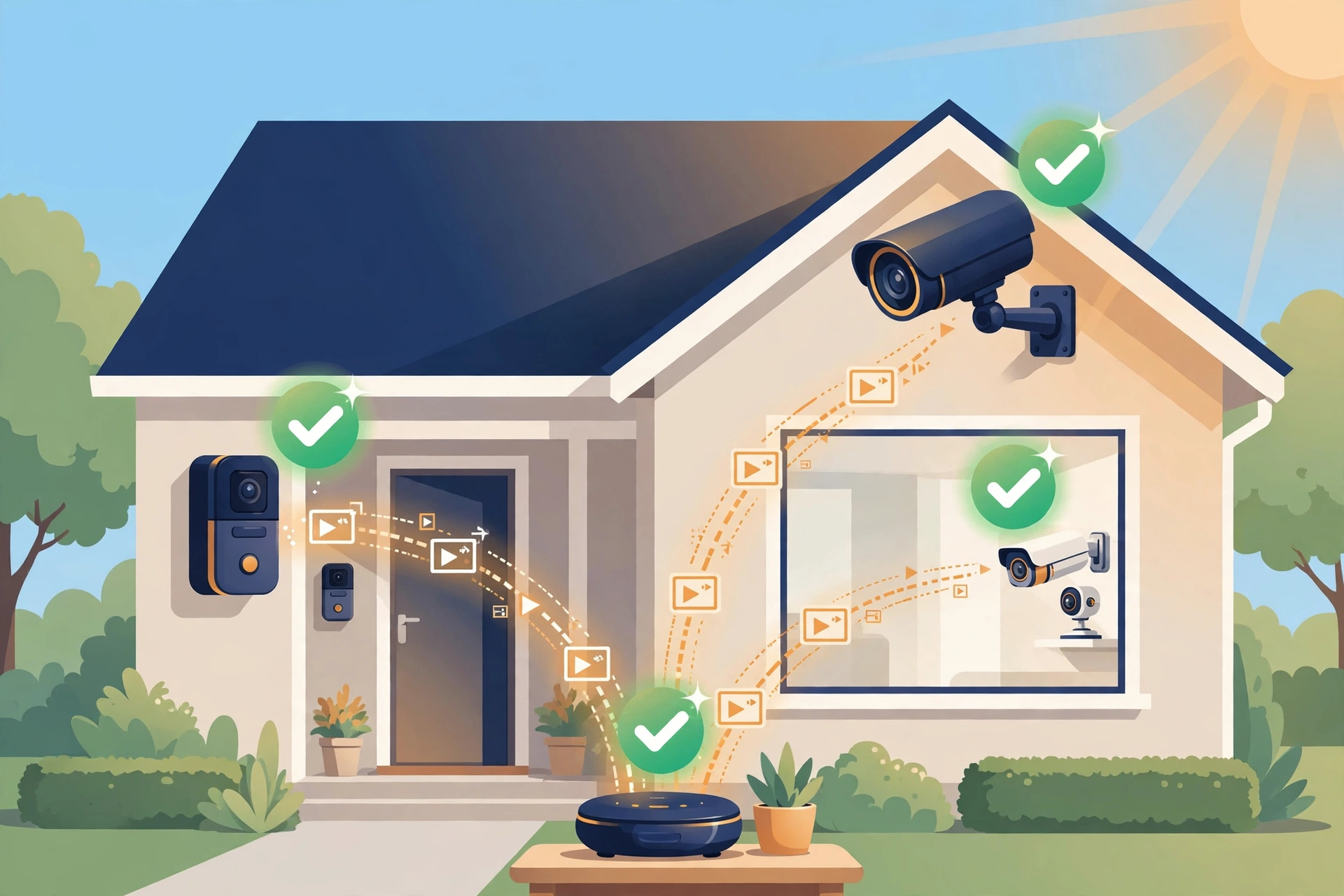
eufyCam 3 / 3C (outdoor, battery) — These pair with the HomeBase 3 (S380), which has 16GB of built-in local storage — eufy rates it at roughly 90 days of recordings for a single camera under normal use. Person, vehicle, and pet detection run on the HomeBase itself, so the “smart” features work with no ongoing cost. Storage expands to 16TB with a standard 2.5-inch SATA hard drive or SSD. The 2-camera eufyCam 3C kit runs about $469.99 .
eufyCam E330 (outdoor) — Pairs with the HomeBase 3 (S380); retailers list it as an “additional camera, requires HomeBase 3 to operate.” Same local-storage, no-fee deal as the eufyCam 3 series.
SoloCam series (outdoor, standalone) — These have built-in local storage and don’t need a HomeBase at all. Same deal: record, detect, review — no fees.
Indoor Cam C120 / E220 / S350 — Indoor cameras record to a microSD card (up to 128GB, card sold separately). The C120 (2K) is the budget pick at around $50; the S350 (4K dual-lens with pan/tilt tracking) runs about $129 . No hub required, no subscription required.
Video Doorbell E340 — Dual 2K cameras with 8GB of onboard storage, roughly 60 days of event clips (eufy’s estimate), battery or wired power, $149.99 . Works standalone or paired with HomeBase 3. No monthly fee required .
Floodlight Cam E340 — Records to a microSD card up to 128GB; eufy rates it at up to 90 days based on 45 events per day. Wired power, no subscription.
For how long those local clips actually last, see how long eufy local storage lasts — the answer depends on your clip length more than your camera count.
The one trade-off: off-site backup costs extra
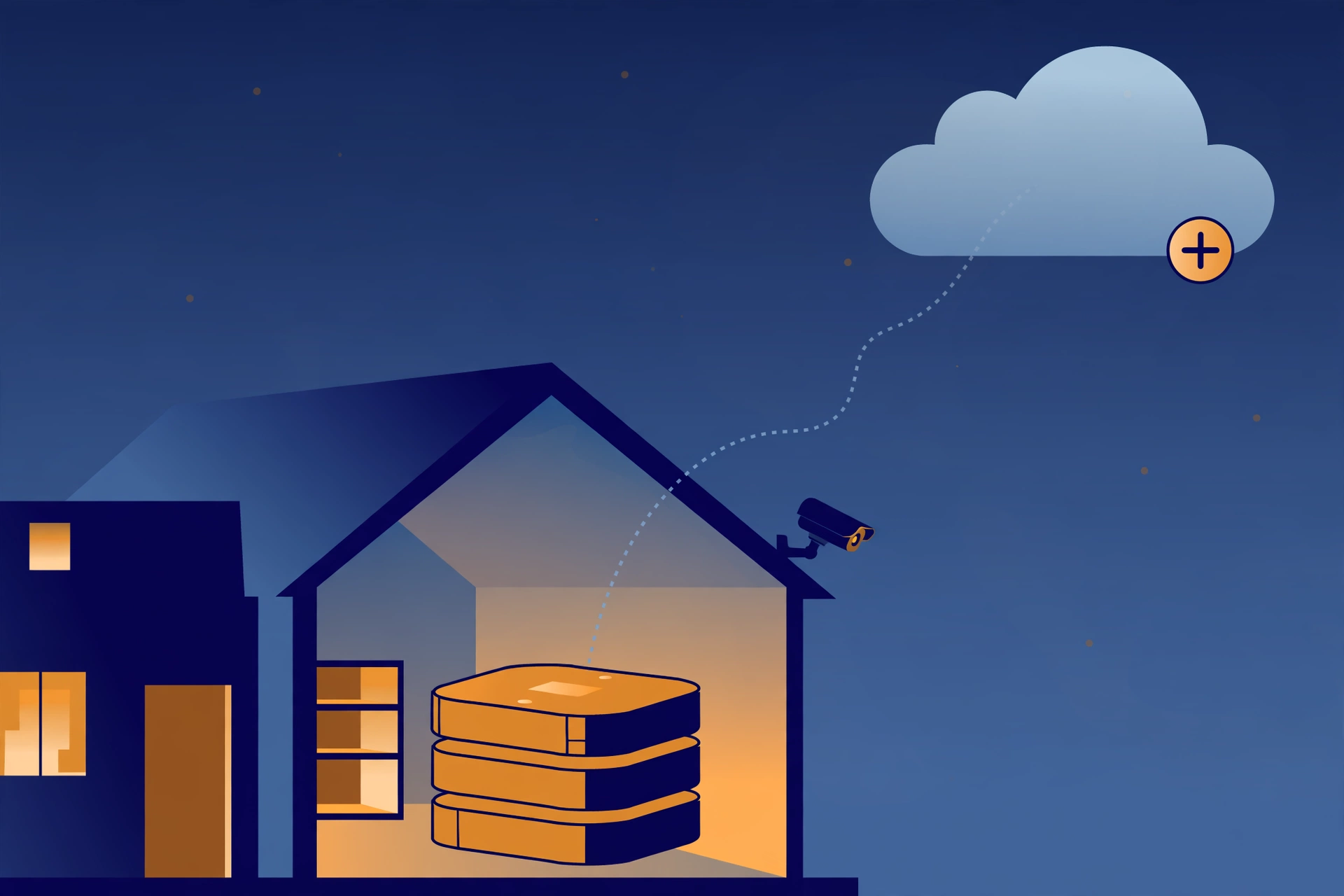
Eufy is local-first. Unlike Arlo, Ring, or Nest, there’s no cloud storage included — your footage lives on your hardware by default. That’s a privacy advantage (recordings stay on your devices, not a company’s servers) and a resilience disadvantage (if someone steals the HomeBase, the footage goes with it). The fix is Eufy’s optional Cloud Backup add-on (roughly $3–4/month per device or ~$14/month for unlimited devices, 30 days of history) — the only recurring paid extra Eufy sells. If off-site backup is non-negotiable for you, look at our Eufy vs Arlo no-subscription comparison for how the costs stack up.
Contrast that with Ring, where the free tier is far thinner — our Ring doorbell without a subscription page shows exactly what breaks without a plan.
What about the 2022 privacy incident?

It’s the fair question, and Eufy doesn’t get a pass here. In late 2022, security researchers showed that Eufy cameras were uploading thumbnail images to cloud servers despite the company’s “local only” marketing. Eufy initially denied it, then acknowledged the behavior and tightened its encryption and data-handling practices.
Our take: the incident was real and the initial response was poor. Since then, Eufy has published more about its security architecture and no equivalent issue has surfaced publicly. If you buy Eufy, harden the setup — strong unique password, two-factor authentication on your eufy account, and keep firmware updated. If the 2022 story is a dealbreaker, that’s legitimate — consider Reolink or Tapo as local-storage alternatives.
Late-2026 update: still no subscription — and the newest doorbell keeps it that way
Nothing changed in 2026, and that is the news. Eufy still charges nothing for recording, AI detection, or video history — the only paid extra remains the optional Cloud Backup add-on for off-site copies, already priced on this page. If you see older roundups quoting a lower Cloud Backup price, treat them as stale; the figures on this page are the current ones.
The newest model follows the same rule. Anker’s eufy Video Doorbell S4 went on sale 15 October 2026 at $299.99 with Chime 2, with 3K 180-degree video — and it records locally like the rest of the line, no plan required. The pattern holds across every model on this page: the subscription is an optional extra for off-site backup, never the price of seeing your own footage.
The one weakness that has not changed either: local storage means the hub is a single point of failure. If the HomeBase is stolen or damaged, the clips go with it. Cloud Backup is the only off-site answer eufy sells, and there is no free off-site option. That is the honest trade for $0/month.
Frequently asked questions
Do I need to pay anything monthly for Eufy?
No. There is no monthly plan, no annual plan, and no “premium unlock” required for core functionality.
Does Eufy offer an optional cloud plan?
Yes — Eufy sells an optional Cloud Backup add-on (roughly $3–4/month per device or ~$14/month for unlimited devices, 30 days of history) for off-site backup. It’s entirely optional.
What happens when the local storage fills up?
The oldest recordings are overwritten automatically (loop recording). On HomeBase 3, you can expand storage with a 2.5-inch SATA drive.
Do Eufy cameras work with Alexa and Google?
Yes — voice control and live view work with Amazon Alexa and Google Assistant. HomeKit support is limited to certain models.
Can I view my Eufy cameras remotely?
Yes. Remote live view and recorded clips are accessible through the eufy Security app with no subscription required.
Is Eufy subscription based?
No. Eufy is not a subscription-based brand — its cameras are built around local storage, so recording, live view, two-way talk and smart alerts all work with no monthly fee. The only paid option is Cloud Backup, an optional add-on that keeps a copy of clips online in case the camera is stolen.
Are Eufy cameras subscription free?
Yes. Every Eufy camera works subscription-free out of the box: live view, motion and AI detection alerts, two-way talk, and local recording all function with no monthly payment. Nothing is locked behind a paywall — the optional cloud plan only adds off-site backup.
Did eufy add a subscription in 2026?
No. Recording, on-device AI detection, and video history are still free on every model. The only paid extra is the optional Cloud Backup add-on for off-site copies. If a listing or roundup implies a plan is required, it is wrong.
Does the new eufy S4 doorbell need a subscription?
No. The S4 (on sale since 15 October 2026) follows the same local-storage model as the rest of the line — it records without a plan.
What happens to my clips if my HomeBase is stolen or breaks?
They go with it — that is the real cost of local-only storage. Eufy has no free off-site backup. The paid Cloud Backup add-on is the protection against this, and it is the one scenario where paying makes sense even for buyers who chose eufy to avoid fees.
The bottom line
Your next step
- How Long Does Eufy Local Storage Actually Last? (By Model, 2026) — Find out how far local storage really goes, model by model.
- Eufy vs Arlo Without a Subscription: Which Is Actually Cheaper in 2026? — Compare Eufy against Arlo with no subscription.
- Home Security Without a Subscription (2026): The Complete Guide — The complete no-subscription security guide.
Recent updates
- 28 September 2026 — Restructured with Key Takeaways, quick list and FAQ; re-verified specs and prices.
Why you can trust AbodeAlly
AbodeAlly is a research-based buying guide, not a test lab. We don’t run a warehouse of gadgets or a lab bench, so we never invent hands-on test results.
Every pick starts with manufacturer specifications and standards documents, cross-checked against reputable expert reviews and long-term owner feedback. We re-verify specs and prices on a regular update cadence, and each article carries a dated changelog so you can see exactly what changed and when.
Spot an error or an out-of-date price? Tell us and we’ll fix it — corrections are published openly, not buried.
AbodeAlly’s editorial team researches smart-home gear full time. We verify specifications against manufacturer and standards sources, cross-check reputable expert reviews and long-term owner feedback, and re-verify every guide on a regular cadence. We don’t run a test lab, so we never invent hands-on test results.



6 Comments