
Ecobee vs Nest Without a C-Wire (2026 Models)
Choose the ecobee Smart Thermostat (Premium or Enhanced) for the simplest no-C-wire install — the Power Extender Kit is included in the box. Choose the Nest Learning Thermostat (4th gen) if you prefer Nest’s learning features and design; it usually works via power sharing, with the $25 Power Connector as backup if needed. Once it’s installed, see our guide to the best home energy monitors to track your HVAC’s energy use. For the dollar figures behind the hype, see the real savings numbers behind smart thermostats.
Published 28 September 2026 · Updated 28 September 2026
AbodeAlly is reader-supported. When you buy through links on this page, we may earn an affiliate commission — it never changes our picks, and you never pay extra.
Key Takeaways
– ecobee includes the Power Extender Kit in the box — simplest no-C-wire install, no extra purchase.- Nest 4th gen usually works via power sharing; budget the $25 Power Connector as insurance.- Sensi needs no C-wire on most systems and costs ~$130 — the budget pick.- For heat pumps, ecobee’s PEK path is the best-documented no-C-wire solution.
– Nest 4th gen usually works via power sharing; budget the $25 Power Connector as insurance. – Sensi needs no C-wire on most systems and costs ~$130 — the budget pick. – For heat pumps, ecobee’s PEK path is the best-documented no-C-wire solution.
The 60-second verdict
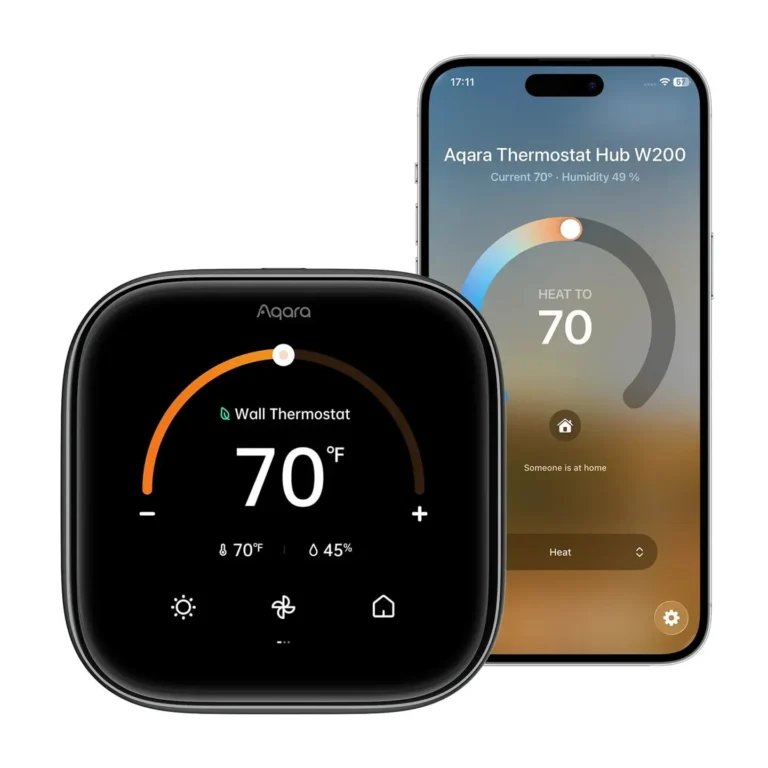
No C-wire and want the simplest out-of-the-box path? Get the ecobee. The ecobee Smart Thermostat Premium and Enhanced both ship with a Power Extender Kit in the box that creates a C-wire connection at your furnace — no extra purchase, no electrician, works on most conventional 4-wire systems (not proprietary/communicating boards or line-voltage systems). Apple Home households have a third option: the Aqara W200, now sold at Apple — though unlike the ecobees, its C-wire adapter ($29.99) is sold separately.
No C-wire but prefer Nest’s learning and design? Get the Nest Learning Thermostat (4th gen). It usually runs fine without a C-wire using power sharing, and if your system is finicky, the Nest Power Connector (sold separately, ~$25) fixes it.
On a budget and just want it to work? The Sensi Smart Thermostat doesn’t need a C-wire on most systems at all — no adapter, no furnace work — though it does need one for heat-pump and heat-only/cool-only setups.
The stale advice still ranking on this query cites the Ecobee4 and Nest 3rd gen (the guides date to ~2022, but the hardware is older still — the Ecobee4 launched in 2017 and the Nest 3rd gen in 2015). Everything below is for the 2026 current lineup: ecobee Smart Thermostat Premium / Enhanced vs. Google Nest Learning Thermostat (4th gen).
The no-C-wire problem, in 30 seconds
A smart thermostat needs continuous 24V power for its display, Wi-Fi radio, and sensors. The C-wire (common wire) provides it. Older homes — roughly anything wired before the 2000s with 4 wires (R, W, Y, G) instead of 5 — don’t have one. Without it, the thermostat must “steal” power through the heating/cooling circuits, which causes ghost calls, short cycling, or a thermostat that won’t stay powered on certain systems.
Not sure whether you have one? See our walkthrough: How to Tell If You Have a C-Wire (With Photos).

Head-to-head: no-C-wire solutions compared
| ecobee Smart Thermostat Premium | ecobee Smart Thermostat Enhanced | Google Nest Learning Thermostat (4th gen) | |
|---|---|---|---|
| Price | $259.99 | $199.99 | $239.99 |
| No-C-wire solution | Power Extender Kit included in the box | Power Extender Kit included in the box | Power sharing (built-in); Nest Power Connector sold separately (~$25) if needed |
| How it works | PEK installs at the furnace control board and repurposes existing wires to create a C connection | Same as Premium | Draws small amounts of power through heating/cooling wires; Power Connector adds a clean C-wire equivalent at the furnace/air handler |
| Install location of adapter | Furnace / air handler control board | Furnace / air handler control board | Furnace / air handler (Power Connector) — or nothing at all |
| Extra purchase needed | No | No | Only if power sharing misbehaves (~$25) |
| Extra install time | +20-30 min (furnace access required) | +20-30 min | +0 min normally; +15 min if adding Power Connector |
| Heat pump support | Full (2H/2C + aux) | Full (2H/2C + aux) | Full |
| Room sensor in box | Yes (1 SmartSensor, occupancy-sensing) | No (compatible, sold separately) | Yes (1 Nest Temperature Sensor 2nd gen; extras sold separately, temp-only — no occupancy sensing) |

How each solution actually works
ecobee: Power Extender Kit (included)
The PEK is a small module you wire into your furnace’s control board. It lets the thermostat share the existing 4 wires to derive continuous power — effectively manufacturing a C-wire without running new cable. Because it’s in the box with both the Premium and Enhanced, the included-in-the-box PEK gives ecobee the simplest documented no-extra-cost path on most 4-wire systems. (One caveat: the PEK doesn’t cover every setup — proprietary/communicating control boards and line-voltage systems need a different approach.)
The honest catch: the PEK installs at the furnace, not the thermostat. That means finding your furnace/air handler, opening the panel (breaker OFF), and matching terminals on the control board. On older Lennox and Carrier boards the terminal labeling doesn’t always match ecobee’s diagram — and miswiring can blow the furnace’s 3-amp fuse. The fuse costs $4; figuring out which fuse blew costs a service call. Take a photo of every wire before you touch anything. (Source: home.renovation.reviews, spring 2026 installer notes)
Nest: power sharing (+ optional Power Connector)
The Nest Learning Thermostat (4th gen) is designed to run without a C-wire on most 24V systems by sipping power through the heating and cooling wires. Google’s position: fewer than 1% of installs need a C-wire or Power Connector. In practice, power sharing works cleanly on most modern forced-air systems and gets flaky on older or low-current ones — symptoms are the classic ones: the thermostat reboots, the battery won’t hold charge, or the HVAC short-cycles.
If that happens, the Nest Power Connector (~$25, sold separately) installs at the furnace/air handler and gives the Nest a proper continuous-power path — the same class of fix as the PEK. Note: some retailers bundle it; Google’s box does not include it as standard, so confirm before you buy.
The third option: Sensi (no adapter at all)
The Emerson Sensi Smart Thermostat (ST55) is engineered to run without a C-wire on most conventional systems — no kit, no furnace work. Exceptions where it does need a C-wire: heat-only systems, cool-only systems, heat pumps without auxiliary heat, and Apple HomeKit setups. It’s also the budget pick at roughly half the price of the flagships. The tradeoff: fewer smarts (no learning, no room sensors in the box, basic display). If your only problem is “no C-wire, want a smart thermostat that just works,” Sensi is the path of least resistance. (Source: Home Depot / Emerson specs)
The fourth option: 24V plug-in transformer (~$15-25)
A plug-in 24V transformer (snaked from a nearby outlet to the thermostat’s C and Rc terminals) is the old-school fallback that works with any thermostat. It’s inelegant — visible wire along the wall unless you fish it — but it’s cheap and bulletproof. Worth knowing about; rarely the best first choice in 2026.
True cost comparison (no-C-wire home)
| Thermostat | Adapter | Total to get running | |
|---|---|---|---|
| ecobee Enhanced | $199.99 | Included (PEK) | $199.99 |
| ecobee Premium | $259.99 | Included (PEK) | $259.99 |
| Nest Learning 4th gen (power sharing works) | $239.99 | $0 | $239.99 |
| Nest Learning 4th gen (+ Power Connector) | $239.99 | ~$25 | ~$265 |
| Sensi ST55 | ~$130 | $0 | ~$130 |

Scenario verdicts
- No C-wire, want it to work out of the box → ecobee Enhanced. Cheapest documented no-extra-purchase path, PEK in the box, full heat-pump support.
- No C-wire, want the best thermostat period → ecobee Premium. Same PEK advantage plus air-quality monitor and Alexa built in (the Nest 4th gen does ship a temp-only room sensor in the box too; ecobee’s adds occupancy sensing).
- No C-wire, love Nest’s learning and design → Nest Learning (4th gen). It’ll probably work with nothing extra; budget the $25 Power Connector as insurance.
- No C-wire, heat pump system → ecobee (either). The PEK path is the best-documented no-C-wire solution for heat pumps, and ecobee’s aux-heat handling is the most configurable. (Sensi needs a C-wire on heat pumps without auxiliary heat — if your heat pump has aux heat, Sensi stays in play; check your setup.)
- No C-wire, tightest budget → Sensi. No adapter, no furnace work, ~$130.
What the stale 2022-era answers get wrong
If you’re reading a comparison that mentions the Ecobee4 or the Nest Learning Thermostat 3rd gen, it’s outdated for this decision. What changed: the Nest 4th gen (2024) redesigned power management and added Matter; ecobee’s current Premium/Enhanced still ship the PEK but the models and pricing moved. Any “no C-wire” advice that doesn’t name the 4th-gen Nest or the current ecobee pair is answering a question about hardware you can barely buy anymore.
Frequently asked questions
Can I just use the G-wire as a C-wire?
Yes — this is a common, widely-used DIY/field practice: move the G (fan) wire to the C terminal at both the thermostat and the furnace board. You lose independent fan control (“fan only” mode), but you gain a real C-wire with zero new cable. Only do this if you never use fan-only mode.
Will power stealing damage my HVAC?
It won’t damage the equipment, but it can cause maddening symptoms: the furnace or AC short-cycling, the thermostat rebooting when the system calls for heat, or the display going dark. If you see any of these on a Nest without C-wire, that’s your sign to add the Power Connector.
Do I need an electrician for the PEK or Power Connector?
No — it’s low-voltage (24V) work, firmly in DIY territory. But you are opening your furnace panel, so: breaker OFF, photo of every wire before disconnecting, and if the terminal labels don’t match the diagram, stop and call an HVAC tech rather than guessing. A $4 fuse is cheap; a fried control board is not.
Sources
- trunetto.com — ecobee Premium vs Nest 4th gen (prices verified Sep 27, 2026)
- smarthomeexplorer.com — Nest vs ecobee heat-pump guide 2026 (PEK vs Power Connector)
- home.renovation.reviews — spring 2026 installer notes (PEK pitfalls, fuse warning)
- Home Depot / Emerson — Sensi C-wire requirements
Your next step
- How to Tell If You Have a C-Wire — Not sure about your wiring? Check before you buy.
- Do I Need a Hub for Matter Devices? (2026) — Check whether your shortlisted thermostat needs a hub for its smart features.
Recent updates
- 28 September 2026 — Restructured with Key Takeaways, quick list and FAQ; re-verified specs and prices.
Why you can trust AbodeAlly
AbodeAlly is a research-based buying guide, not a test lab. We don’t run a warehouse of gadgets or a lab bench, so we never invent hands-on test results.
Every pick starts with manufacturer specifications and standards documents, cross-checked against reputable expert reviews and long-term owner feedback. We re-verify specs and prices on a regular update cadence, and each article carries a dated changelog so you can see exactly what changed and when.
Spot an error or an out-of-date price? Tell us and we’ll fix it — corrections are published openly, not buried.
AbodeAlly’s editorial team researches smart-home gear full time. We verify specifications against manufacturer and standards sources, cross-check reputable expert reviews and long-term owner feedback, and re-verify every guide on a regular cadence. We don’t run a test lab, so we never invent hands-on test results.

4 Comments