Matter vs HomeKit: What’s the Difference in 2026?
Search “Matter vs HomeKit” and the top results are two to four years old — written before Matter supported cameras, before Apple retired the old HomeKit architecture, and before the HomeKit name itself started disappearing. Those answers describe a smart home that no longer exists. Here’s the 2026 version: what Matter and HomeKit actually are today, how they fit together, and which one your household should build on.
The confusion is understandable, because the comparison itself is slightly wrong. Matter and HomeKit aren’t rivals. One is a language devices speak; the other is the app you speak to them through. Once you see that, every buying decision gets simpler.
Key Takeaways
- Matter is a connectivity standard run by the Connectivity Standards Alliance (Apple, Google, Amazon, Samsung and 850+ others, per the CSA). It lets devices from different brands work together. Current version: Matter 1.6, released June 17, 2026.
- “HomeKit” is becoming “Apple Home.” Apple retired the original HomeKit architecture on February 10, 2026, and has been replacing the HomeKit brand with Apple Home across its software. It’s Apple’s smart-home platform — the app, Siri, and automations — not a competing standard.
- They interoperate. Matter-certified devices work inside Apple Home. Buying Matter gear is the most future-proof move for Apple households and mixed iPhone/Android homes.
- What’s new in 2026: Matter 1.6 adds tap-to-set-up NFC commissioning, Joint Fabric multi-ecosystem sharing, and smarter thermostat behavior; Apple Home gained Adaptive Temperature and Clean Energy Guidance on OS 26.
- The old advice to ignore: anything telling you to “choose Matter or HomeKit” as if they’re substitutes. The real choice is which ecosystem app runs your home — and Matter devices keep every option open.
Disclosure: This article currently contains no affiliate links — it’s an explainer written for clarity, not commissions. If that changes, we’ll say so.
The 30-second answer
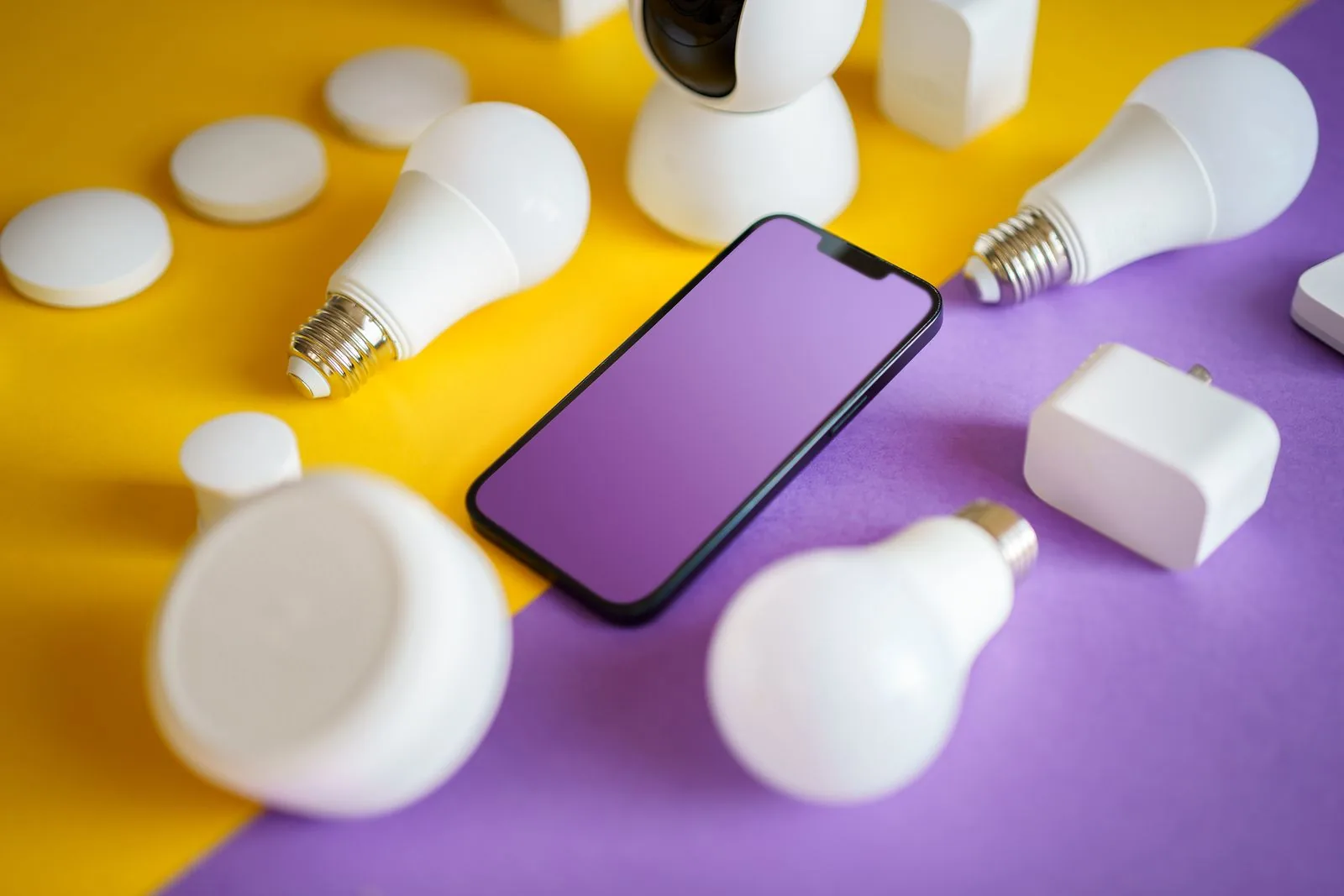
Matter is the industry-wide standard that lets a smart bulb, lock, or thermostat talk to any major platform — Apple Home, Google Home, Alexa, SmartThings. HomeKit was Apple’s original smart-home framework; Apple is now folding that name into Apple Home, the app-and-platform experience on iPhone, iPad, Mac, Apple TV, and HomePod. A Matter light bulb can appear in your Apple Home app, respond to Siri, and simultaneously answer to Alexa in the same house. That’s the whole point.
If you remember one sentence: Matter is the standard, Apple Home is the controller. You don’t pick between them — you pick an ecosystem to live in, and you buy Matter devices so you’re never locked into it.
What Matter actually is (2026 edition)
Matter launched in 2022 as the smart home’s peace treaty: instead of every brand speaking its own protocol, devices would speak one open standard over Wi-Fi, Thread, and Ethernet, controlled from any participating platform. The Connectivity Standards Alliance — whose members include Apple, Google, Amazon, and Samsung — publishes the specification, and the version number tells you how far that peace treaty has come.
Matter 1.6 arrived on June 17, 2026, announced at the CSA’s first Unify conference in Austin, Texas (per MacRumors and TechTimes). It doesn’t add new device categories — instead it attacks the two complaints that have dogged Matter since launch: painful setup and multi-ecosystem friction. Three changes matter for buyers:
- NFC-Based Commissioning: you can now pair a device with a tap of your phone — even before it has power. A bulb can be set up before it’s screwed into the ceiling fixture; an in-wall switch before mains power is restored (per MacRumors, Cult of Mac). Earlier versions still needed Bluetooth LE to finish the job.
- Joint Fabric: multiple authorized controllers can now co-administer one shared Matter network. Add a device once and it’s visible to every participating ecosystem — the iPhone and the Android phone in the same house — without enrolling it separately in each (per iClarified, MacRumors).
- Thermostat Suggestions: controllers now submit time-bound suggestions tied to the thermostat’s presets instead of barking direct commands, so a routine from one ecosystem can’t accidentally stomp a utility demand-response commitment made in another (per MacRumors).
The road here matters too. Matter 1.5 (November 2025) added camera support; 1.5.1 (March 2026) improved camera streaming and doorbells (per Wikipedia’s Matter standard timeline). Any “Matter vs HomeKit” article from 2023 was written when Matter couldn’t do cameras at all — one more reason the old answers mislead.
For the full ground-up explainer — Thread, border routers, fabrics, and which devices to buy — see our What Is Matter in Smart Home Tech? (2026 explainer).
What “HomeKit” means in 2026
HomeKit debuted in 2014 as Apple’s framework for smart-home accessories: strict certification, Siri control, and a famous privacy stance — your home data processed locally, not mined in the cloud. For a decade, “HomeKit-compatible” on a box meant it would work with the Home app and Siri.
Two things changed the name. First, the architecture: Apple introduced a rebuilt Home architecture with iOS 16.2 back in 2022, kept the old one running for stragglers — and then ended support for the original HomeKit architecture on February 10, 2026 (per AppleInsider and Wikipedia). Devices stuck on software older than iOS 16.2 lost smart-home functionality; everyone else had to be on the new framework. Second, the branding: 9to5Mac reported in August 2025 that tvOS 26 betas were replacing “HomeKit” references in Settings with “Apple Home,” the new unified name for Apple’s smart-home platform. So in 2026, “HomeKit” is a legacy term for what Apple now calls Apple Home.
What Apple Home gives you in the OS 26 era (Apple’s year-based naming replaced the old numbering — what was rumored as “iOS 19” shipped as iOS 26, per AppleInsider): the Home app, Siri control, local-first automations, guest access, activity history, and two genuinely new tricks — Adaptive Temperature, which pre-conditions your home by learning your routine instead of merely reacting when you arrive, and Clean Energy Guidance, which nudges heating and cooling toward cleaner grid times. Both need OS 26 across your devices and home hub. The Aqara Thermostat Hub W200 — now sold at Apple — is the first thermostat to support both, which is exactly why Apple put it on its shelves.
How they fit together (with a real example)
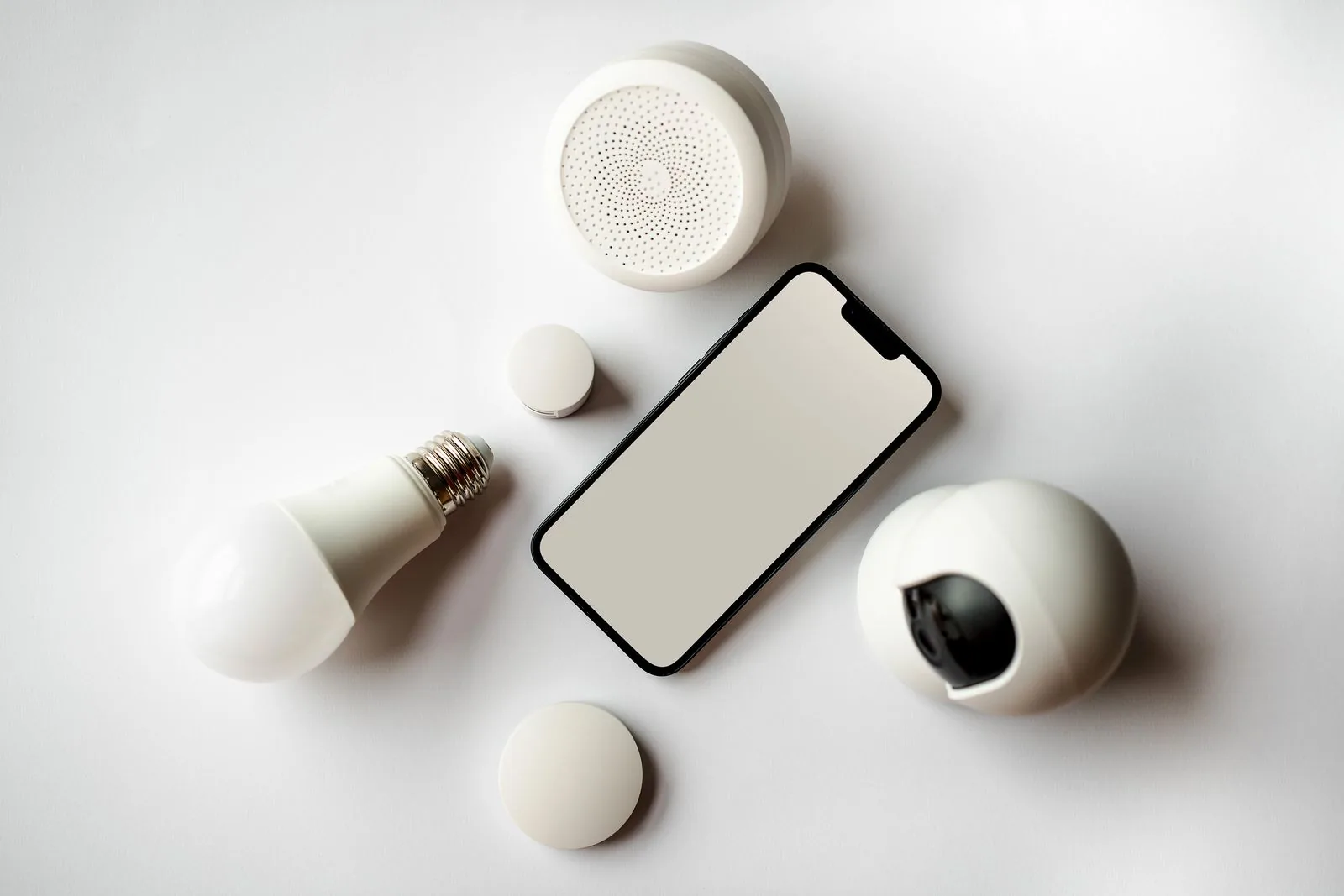
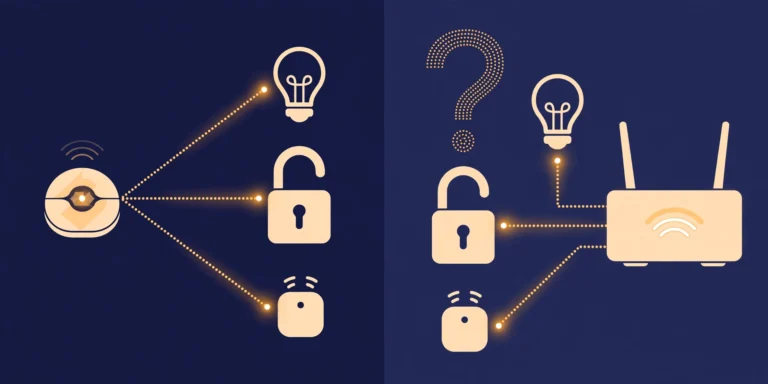
Here’s a concrete 2026 household. You buy a Matter-over-Thread smart lock. You add it to Apple Home with your iPhone — it appears in the Home app, responds to “Hey Siri, lock the front door,” and joins your Good Night scene. Your partner, on Android, opens Google Home — and the same lock is there too, thanks to Matter’s multi-admin design (and, once platforms adopt it, the simpler Joint Fabric sharing from Matter 1.6). One device, two ecosystems, zero duplicate setup. Neither Apple nor Google had to bless the other’s app.
That is the relationship: Apple Home is one of several controllers speaking the Matter language. Apple’s membership in the Alliance is why the Cult of Mac could note Matter 1.6 was built with “the tens of millions who rely on Apple Home” in mind. Choosing Apple Home doesn’t reject Matter — the best Apple Home setups in 2026 are built substantially from Matter devices.
Matter vs Apple Home: side by side
| Matter | Apple Home (formerly HomeKit) | |
|---|---|---|
| What it is | An open connectivity standard — the common language devices speak | Apple’s smart-home platform — the app, Siri, automations, and ecosystem experience |
| Run by | Connectivity Standards Alliance (Apple, Google, Amazon, Samsung + 850+ members, per the CSA) | Apple |
| Current version (Oct 2026) | Matter 1.6 (June 17, 2026): NFC commissioning, Joint Fabric, Thermostat Suggestions | OS 26 generation; legacy HomeKit architecture retired Feb 10, 2026 |
| What you buy | Devices with the Matter logo — bulbs, locks, thermostats, sensors, now cameras | Nothing directly — you use the Home app on devices you own; accessories carry “Works with Apple Home” |
| Cross-platform? | Yes — the entire point. One device can serve Apple Home, Google Home, and Alexa simultaneously | No — Apple devices only, though it happily controls Matter-standard gear |
| Voice control | Whichever assistant your controller offers | Siri, with deep iPhone/Apple Watch integration |
| Privacy model | Local-first by design; exact handling depends on the platform you pair it with | Apple’s privacy stance: local processing, minimal cloud |
| Do you choose one? | No — they stack. Buy Matter devices, run them from Apple Home (or any platform). | |
Why the old answers are wrong (what changed)
If you opened a “Matter vs HomeKit” result from 2022–2024, here’s what it couldn’t know:
- It calls the platform “HomeKit.” Apple has been retiring that brand in favor of Apple Home, and the old architecture behind the name was switched off in February 2026. Advice built on the old framework is describing retired software.
- It predates Matter cameras. Camera and doorbell support only arrived with Matter 1.5 in late 2025. Old comparisons that say “Matter can’t do cameras” are simply out of date.
- It predates multi-admin that actually works. Early Matter’s promise of “one device, every ecosystem” was shaky in practice; Matter 1.6’s Joint Fabric is the fix — but platform support is still rolling out, so check your app’s version before assuming it works.
- It misses the OS 26 features. Adaptive Temperature and Clean Energy Guidance are Apple Home exclusives that change the thermostat calculus for Apple households — and they didn’t exist when those articles were written.
Which should you choose? A decision guide
Since they stack rather than compete, the real question is which controller to live in — and the answer depends on your household:
- All-Apple household (iPhones, maybe Apple TV/HomePod): run everything from Apple Home. You get Siri, local-first automations, and the OS 26 exclusives. Buy Matter-certified devices anyway — they’re usually the same price and keep your options open if anyone ever brings an Android phone into the house.
- Mixed iPhone + Android household: this is Matter’s home turf. Buy Matter devices and let each person use their native app — Apple Home on the iPhone, Google Home on the Android — controlling the same hardware via multi-admin. This is the setup the old “pick one ecosystem” advice handled worst.
- Privacy is your top priority: Apple Home remains the strongest story — local processing and Apple’s privacy posture, now running Matter devices that never need a vendor cloud account to function in your home.
- Deeply invested in Alexa or Google Home already: stay where you are. Matter devices join those platforms too — there’s no reason to switch controllers just because Apple renamed its framework.
The through-line: whatever controller you choose, buy the Matter version of the device. It’s the closest thing the smart home has to a future-proofing guarantee.
If you’re still weighing which ecosystem to commit to, see our full ecosystem comparison
Honest caveats
- Specification ≠ shelf. Matter 1.6’s headline features (NFC commissioning, Joint Fabric) only reach you after Apple, Google, and Amazon integrate them into their apps and hubs — historically a process of months to over a year (per TechTimes). Don’t buy a device today for a 1.6 feature your platform hasn’t shipped yet.
- Not every “Matter” device does everything. Certification covers specific device types and features; a Matter lock might expose fewer features than its native-app counterpart. Check the feature list, not just the logo.
- Apple’s exclusives stay exclusive. Adaptive Temperature and Clean Energy Guidance need Apple Home, OS 26 across devices, and (for the energy features) a supported US utility setup. Matter doesn’t magically bring them to other platforms.
FAQ
Is HomeKit dead?
Not dead — renamed and rebuilt. Apple retired the original HomeKit architecture on February 10, 2026, and has been replacing the “HomeKit” brand with “Apple Home” across its software. Your accessories and automations live on under the new name; only devices stuck on pre-iOS 16.2 software lost functionality.
Do I need Matter devices if I use Apple Home?
Strictly, no — Apple Home still works with “Works with Apple Home” accessories. But Matter devices are the safer buy: same functionality in Apple Home today, plus the freedom to add them to Google Home or Alexa later without rebuying. For new purchases in 2026, Matter is the default recommendation.
Do Matter devices work with Apple Home?
Yes. Apple is a founding member of the Connectivity Standards Alliance, and Apple Home has supported Matter since the standard launched. Add a Matter device from the Home app like any other accessory; Thread-based devices need a Thread border router (a HomePod mini, recent Apple TV 4K, or similar) on your network.
Do I need an Apple home hub for Matter devices?
For remote access, notifications away from home, and automations — yes: an Apple TV (4th gen or newer) or any HomePod, kept powered and updated. For Thread-based Matter devices you specifically need a Thread border router, which the HomePod mini, second-gen HomePod, and Apple TV 4K (2nd gen and later) all include. Our Do I Need a Hub for Matter Devices? (2026) guide walks through the combinations.
Will my old HomeKit accessories stop working?
If they’re running through the new Apple Home architecture (anything on iOS 16.2 or later), no — the February 2026 cutoff only ended support for the legacy architecture. If you ignored the upgrade prompts for years on an old iPhone, those devices lost smart-home functionality and need the architecture upgrade described in Apple’s support guide.
Sources
- MacRumors (Jun 17, 2026): Matter 1.6 Announced With NFC Setup, Cross-Ecosystem Device Sharing, and Smarter Thermostats
- TechTimes (Jun 19, 2026): Matter 1.6 Fixes Smart Home Setup and Ecosystem Conflicts With NFC and Joint Fabric
- AppleInsider — Smart Home Insider podcast (Jun 22, 2026): Jon Harros from the CSA talks Matter 1.6
- iClarified (Jun 2026): Matter 1.6 Brings NFC Setup, Joint Fabric, and Smarter Thermostats
- Cult of Mac (Jun 2026): New Matter smart-home standard updates
- Wikipedia — Matter (standard): version history (1.5, 1.5.1, 1.6)
- Connectivity Standards Alliance (Jan 5, 2026): Unify announcement — 850+ member companies, Matter launched 2022
- 9to5Mac (Aug 11, 2025): Apple’s ‘HomeKit’ brand could disappear in big new smart home push
- AppleInsider (Feb 9, 2026): Upgrade your Apple Home architecture before the old one dies
- Wikipedia — Apple Home: architecture history and home hub support
We’ll update this as platforms ship Matter 1.6 features (NFC commissioning, Joint Fabric) and as Apple’s Apple Home rebrand completes.



7 Comments