What Is Matter in Smart Home Tech? (2026 Explainer)
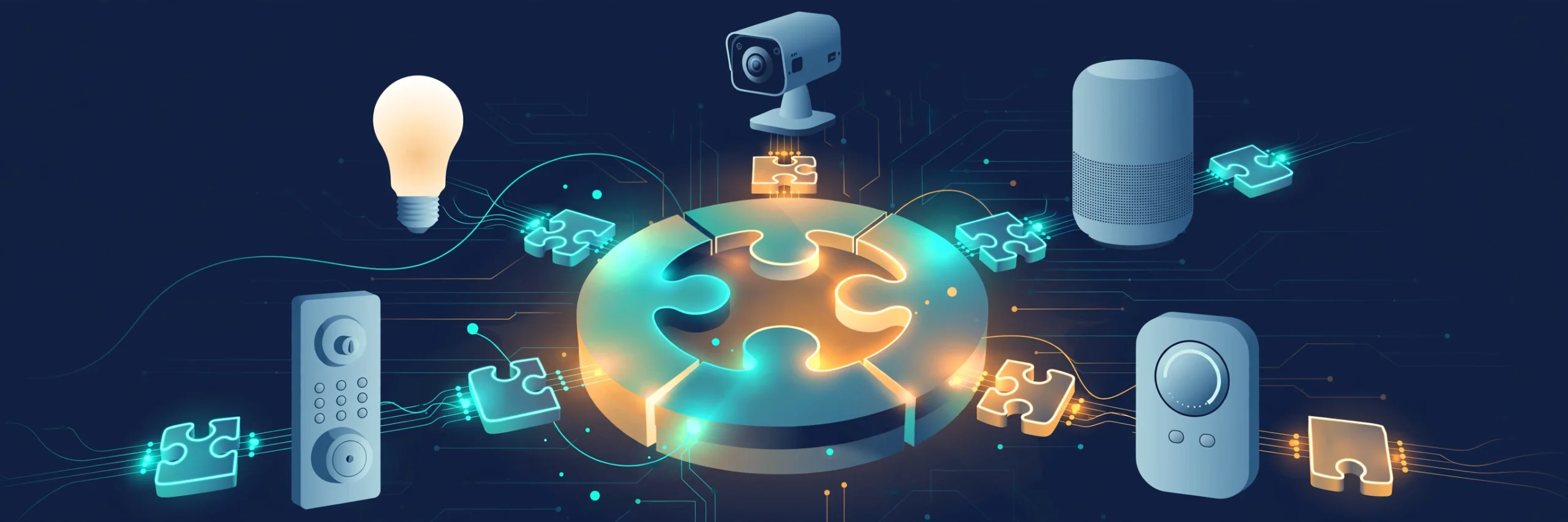
Matter is the smart-home standard that finally lets devices from Apple, Google, Amazon and Samsung work together — no hub required, no single-ecosystem lock-in.
Published 28 September 2026 · Updated 28 September 2026
Disclosure: This article currently contains no affiliate links — nothing here earns us a commission. If that changes, we’ll say so.
The direct answer: yes, Matter is the standard to look for
Matter is a smart-home interoperability standard — not a Wi-Fi replacement, not a brand, and not a gadget. It defines a common language so devices from Apple, Google, Amazon, and Samsung can all talk to each other. Matter devices connect over your existing Wi-Fi or Ethernet, or over a low-power mesh network called Thread. A Matter-certified bulb, lock, or sensor can be controlled from Apple Home, Google Home, Alexa, or SmartThings without vendor lock-in.
Key Takeaways
- Matter is a universal interoperability standard — not a brand — backed by Apple, Google, Amazon, Samsung and 600+ companies via the Connectivity Standards Alliance.
- It runs over Wi-Fi, Thread and Ethernet. Thread needs a border router, but many smart speakers and TVs already are one.
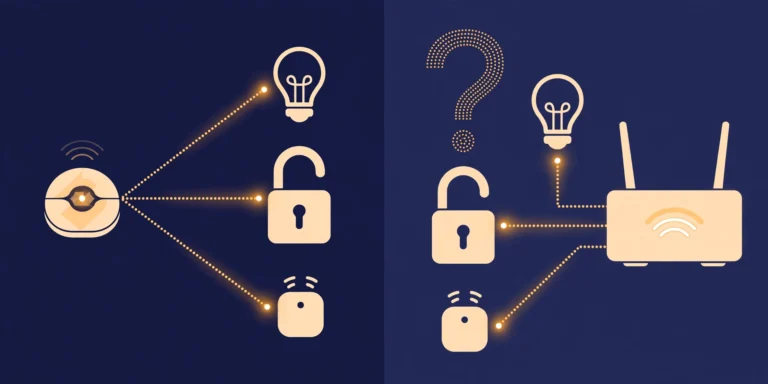
- You do not need a hub, but you do need a Matter controller — a phone app, smart speaker or TV — to set devices up.
- In 2026 the spec is at version 1.6 (June 2026). It covers lights, locks, plugs and sensors — cameras arrived with 1.5.
Matter at a glance
| Standard | Matter (Connectivity Standards Alliance) |
| First released | 2022 (Matter 1.0) |
| Current version | 1.6 (June 2026) |
| Transports | Wi-Fi, Thread, Ethernet |
| Hub required | No — a Matter controller suffices |
| Cost | No subscription; no user licence fee |
Matter explained: the standard, not the signal
The single biggest source of confusion about Matter is the assumption that it’s a new wireless technology like Bluetooth or Wi-Fi. It isn’t. Matter is an application-layer standard — a shared rulebook that sits on top of transport technologies you already own: Wi-Fi, Ethernet, and Thread.
Think of it this way: Wi-Fi is the road, Matter is the traffic law. Your router already provides the road. Matter just means every device agrees to drive on the same side.
The practical result: a Matter-certified device from any brand can join any major smart-home platform — for the functions each platform supports. Ecosystem support still trails the specification: as of mid-2026, platforms like Apple Home had not fully surfaced newer Matter 1.4/1.5 features, so don’t assume the newest spec capabilities work everywhere on day one. Buy a Matter bulb, and you can control it from the Apple Home app, the Google Home app, Alexa, or SmartThings — your choice. Before Matter, that bulb might have been locked to exactly one ecosystem, and switching platforms meant rebuying hardware.
Thread and Matter: the mesh behind the standard
Thread is the part people trip over next. Thread is a low-power IPv6 mesh network designed for small, battery-powered devices: locks, sensors, switches. Instead of every device shouting directly at your router, Thread devices relay messages for each other, forming a self-healing mesh.
Here’s the rule of thumb:
- Matter over Wi-Fi → powered devices (bulbs, plugs, cameras — and Matter light bars like SwitchBot’s new $45.99 pair). Uses your normal router. No extra hardware.
- Matter over Thread → battery devices (locks, sensors, shades). Needs a Thread Border Router to connect the Thread mesh to your Wi-Fi network.
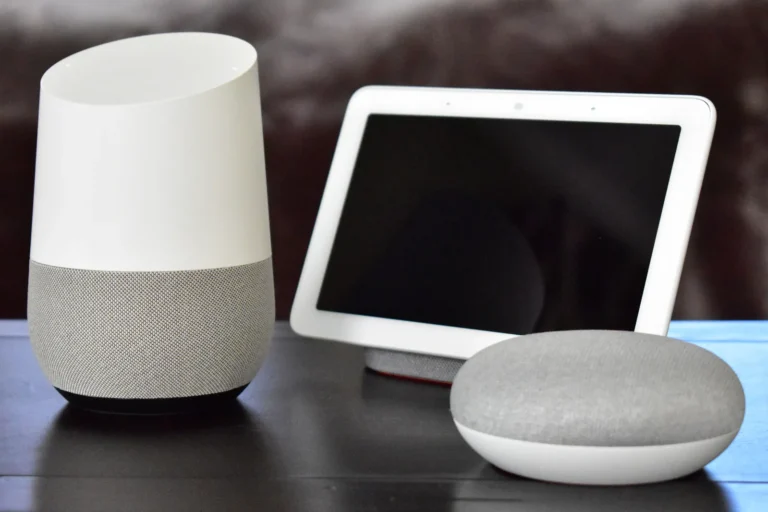
Many devices you already own can act as Thread Border Routers. Current examples include Apple HomePod mini and HomePod (2nd gen), supported Apple TV 4K models, Google Nest Hub (2nd gen), Nest Hub Max, Nest Wifi Pro, Google TV Streamer 4K, Amazon Echo (4th gen), Echo Studio, Echo Hub, several current Echo Show models, and supported eero hardware.
If you are wondering whether any of this means buying a hub, our breakdown of do you need a hub for Matter devices answers it device by device.
Matter’s limits: what it doesn’t do
Honest limits, because the marketing skips these:
- It doesn’t improve your existing Zigbee or Z-Wave devices. They don’t automatically become Matter devices. Some bridges (like certain hub products) can expose Zigbee/Z-Wave devices to Matter controllers, but that’s a bridge feature, not magic.
- It doesn’t guarantee every feature works everywhere. Basic functions — on/off, dimming, locking, temperature — work cross-platform. But a manufacturer’s fancy extras (a camera’s pet-detection zones, a lock’s proprietary guest scheduling) may still live only in that brand’s app.
- It doesn’t eliminate hubs entirely. A Thread-based Matter sensor still needs a Thread Border Router somewhere in your home. It just means the “hub” can be a speaker or streaming box you already own.
- It’s not instant or perfect. Early Matter rollouts had pairing quirks and firmware growing pains. By 2026 the standard has matured considerably, but check that any device you buy carries the Matter logo and current firmware.
Matter for renters: the no-strings standard
If you rent, Matter is quietly one of the best things to happen to your setup. Everything is removable, everything is app-controlled, and nothing is tied to one landlord-unfriendly ecosystem:
- No-hub bulbs that work over Wi-Fi join any platform you prefer.
- Retrofit locks with Matter over Thread talk to your Apple HomePod mini or Echo without extra bridges.
- You take it all with you. When you move, unpair, pack, and re-pair at the next apartment — no ecosystem migration project.
For renter-specific picks, see our guides to the best smart bulbs that need no hub and the best no-drill smart locks for renters.
Matter vs. Zigbee vs. Z-Wave vs. Wi-Fi: the quick comparison
| Matter | Thread | Zigbee | Z-Wave | Wi-Fi | |
|---|---|---|---|---|---|
| What it is | Interoperability standard | Mesh protocol | Mesh protocol | Network transport | |
| Cross-platform? | Yes — Apple, Google, Amazon, Samsung | No (needs compatible hub) | No (needs compatible hub) | Depends on the device | |
| Needs a hub? | Only for Thread devices (border router) | Yes — hub required | Yes — hub required | No — uses your router | |
| Best for | Future-proof new purchases | Large existing setups | Large existing setups | Simple, renter-friendly setups | |
| Who controls it | Connectivity Standards Alliance (Apple, Google, Amazon, Samsung and others) | Thread Group | Zigbee Alliance / CSA | Z-Wave Alliance | |
| The catch | New features arrive on paper months before platforms ship them | Only powered devices extend the mesh — battery sensors do not | A new purchase in 2026 usually means buying into yesterday | Same as Zigbee, with a smaller device range |
The Matter spec in 2026: version 1.6 and what’s new
The current Matter specification is 1.6, released June 17, 2026 by the Connectivity Standards Alliance. The same alliance also published Aliro 1.0, an open standard that turns Apple Wallet and Google Wallet into house keys. The previous release, 1.5 (November 2025), was the big one for camera buyers — it finally added camera support (plus closures, soil sensors, energy tariffs, and TCP transport). Matter 1.6 adds no new device types; instead it targets easier setup (NFC-based commissioning) and better multi-ecosystem sharing via “Joint Fabric.” Note that platform support lags the spec by months to over a year, so newly standardized features take time to actually work in Apple Home, Google Home, and Alexa.
Should you buy Matter in 2026: yes, when the price is right
Yes — when the price and features are equal. A Matter-certified device is simply a safer bet: it won’t strand you if you switch from Alexa to Apple Home next year. In theory that flexibility should also help resale value — but treat that as reasoning, not a proven trend. But don’t pay a big premium just for the Matter logo on a device category where you’re happy with the brand’s own app. Matter is a tiebreaker, not a religion.
Related: Do I need a hub for Matter devices? — the full breakdown of when a hub (or border router) is actually required. And if you’re asking the bigger question — do you even need a hub? — our 2026 guide walks through the full decision framework.
Our full ecosystem comparison of Alexa, Google Home, and Apple Home for 2026 — which platform should run your Matter devices.
When you are ready to buy, our picks for the best Matter devices of 2026 are chosen on exactly this tiebreaker logic.
Sources
- Matter/Thread overview: smarthomeperfected.com/matter/
- Matter vs Thread deep-dive: datawiresolutions.com/blog/matter-thread-explained-2026
- Thread Border Router FAQ: support.nanoleaf.me
Matter in late 2026: what changed since the summer
The spec has moved twice since Matter 1.6, and the platform story has split in a way buyers should know about. Neither change rewrites the basics on this page — Matter is still the shared language, Thread is still the mesh — but both change what to expect from the label on the box.
Matter 1.5.1 (March 2026) polished the cameras. The March update did not add device types. It refined what 1.5 introduced: multi-stream video and audio, HEIC snapshots, HLS and DASH upload support, and chime and intercom refinements. In plain terms: the camera spec got more usable before most platforms had even shipped the first version of it.
Matter 1.6.1 (September 2026) is maintenance, not a leap. The latest published spec adds no new device types. It revises the Groupcast cluster — one message to a group of devices instead of addressing each one individually, which matters when you switch off ten lights at once — updates the Chime device type (it can now play preinstalled sounds), optimises access control, and refines the camera cluster for more stable streaming and clip recording. Expect it to take months before these refinements reach actual products: every Matter release has to be built into devices and apps first.
The platform gap is now the story. Samsung SmartThings shipped Matter 1.5 camera support first — the only major controller to do so as of mid-2026 reporting — working with Aqara, Eve and Ulticam on Matter cameras. Apple Home, Google Home and Alexa had not shipped Matter 1.5 camera support in the same period. That is why the buying advice on this page still holds: buy the camera for what it does today, and treat Matter as a bonus until your platform reads it.
One myth to drop: there is no Matter 2.0. As of October 2026, no Matter 2.0 has been announced. The version line runs 1.5 (November 2025), 1.5.1 (March 2026), 1.6 (June 2026), 1.6.1 (September 2026). Any article or listing claiming Matter 2.0 support is wrong.
Frequently asked questions
Does Matter replace my Wi-Fi router?
No. Matter runs on top of your existing network — Wi-Fi, Ethernet or Thread. Your router stays; Matter is the common language devices speak over it.
Is Matter the same as Thread?
No. Thread is a low-power mesh network (the road); Matter is the application-layer standard (the traffic law). Matter can run over Thread, Wi-Fi or Ethernet.
Do I need a hub for Matter devices?
Not a traditional hub. Wi-Fi Matter devices need nothing extra; Thread devices need a Thread border router, which many Apple, Google and Amazon devices already provide.
Which voice assistants work with Matter?
Alexa, Google Assistant and Siri (via Apple Home) all support Matter. A Matter device can be controlled from any of them once paired.
Is Matter secure?
Matter was designed with security at its core: every device is authenticated, and all communication is encrypted. It is a major step up from older protocols.
What is the latest Matter version in late 2026?
Matter 1.6.1, published in September 2026 — a maintenance release with no new device types. Matter 1.6 (June 2026) is the last feature release: NFC-based setup, Joint Fabric for multi-platform sharing, and Thermostat Suggestions. There is no Matter 2.0.
Do Matter cameras work with Apple Home, Google Home and Alexa yet?
Not as a Matter feature, as of mid-2026 reporting. Samsung SmartThings was the first major platform to ship Matter 1.5 camera support; Apple, Google and Amazon had not followed in the same period. A Matter camera still works — it just works through the brand’s own app or an older integration until your platform catches up. Buy on the camera’s own merits first.
What is Joint Fabric, and can I use it yet?
Joint Fabric, from Matter 1.6, lets several platforms co-manage one shared Matter network with a central datastore, instead of each platform keeping its own separate network and syncing access between them. You cannot use it yet in most homes: it is a specification, and Apple, Google, Amazon and Samsung each have to build it into their apps first. No platform has announced a timeline.
Can one Thread device answer to Apple Home and Google Home at the same time?
Yes, through Matter’s multi-admin sharing: commission the device in one app, then share it to the second app from the device’s Matter settings. Separately, Thread 1.4 added credential sharing so border routers on the same home network can join one Thread mesh instead of each spinning up its own. That mesh-level fix works well inside one ecosystem; across ecosystems it still depends on the platforms cooperating, so expect it to be partial for now.
Recent updates
- 28 September 2026 — Restructured with Key Takeaways, fact table and FAQ schema; updated to Matter 1.6 (June 2026).
- September 2026 — First published.
Why you can trust AbodeAlly
AbodeAlly is a research-based buying guide, not a test lab. We don’t run a warehouse of gadgets or a lab bench, so we never invent hands-on test results.
Every pick starts with manufacturer specifications and standards documents, cross-checked against reputable expert reviews and long-term owner feedback. We re-verify specs and prices on a regular update cadence, and each article carries a dated changelog so you can see exactly what changed and when.
Spot an error or an out-of-date price? Tell us and we’ll fix it — corrections are published openly, not buried.



12 Comments