
Ring Smart Lock: Price, Features & Release Date — Everything We Know
Disclosure: This article currently contains no affiliate links — nothing here earns us a commission. If that changes, we’ll say so.
Ring has never made a smart lock. That changes next year. On October 7, 2026, Amazon’s Ring announced its first-ever smart lock — a $249.99 keyless deadbolt with a trick no other lock offers: if the battery dies, you turn a built-in dial with your hand to generate enough power to get back inside.
This matters because the dead battery is the one fear that keeps people away from smart locks. Yale answers it with a physical key. Schlage and Aqara answer it with a USB-C emergency port. Ring thinks both are the wrong answer. A backup key defeats the point of going keyless, and a charging cable sitting in a drawer at home is no use to you on the porch at 1 a.m. in the rain. Ring’s founder, Jamie Siminoff, put it bluntly to GeekWire: “If you have to have a key, it’s like, well, why have a smart lock?”
Ring’s answer is a power dial on the lock itself. Give it five to ten turns, a green light tells you the lock is alive again, and you get in with your fingerprint, a code, or the Ring app. The lock won’t ship until early 2027 in the US — FCC approval is still pending — but the design is already the most interesting thing to happen to the deadbolt in years. Here’s everything that’s confirmed, what’s still unknown, and how it honestly stacks up against Yale, Schlage, and Aqara.
The short version
- Ring’s first smart lock, announced October 7, 2026. A keyless deadbolt at $249.99 — no keyhole at all.
- Four ways in: fingerprint reader, backlit touchscreen keypad, the Ring app, and Alexa voice.
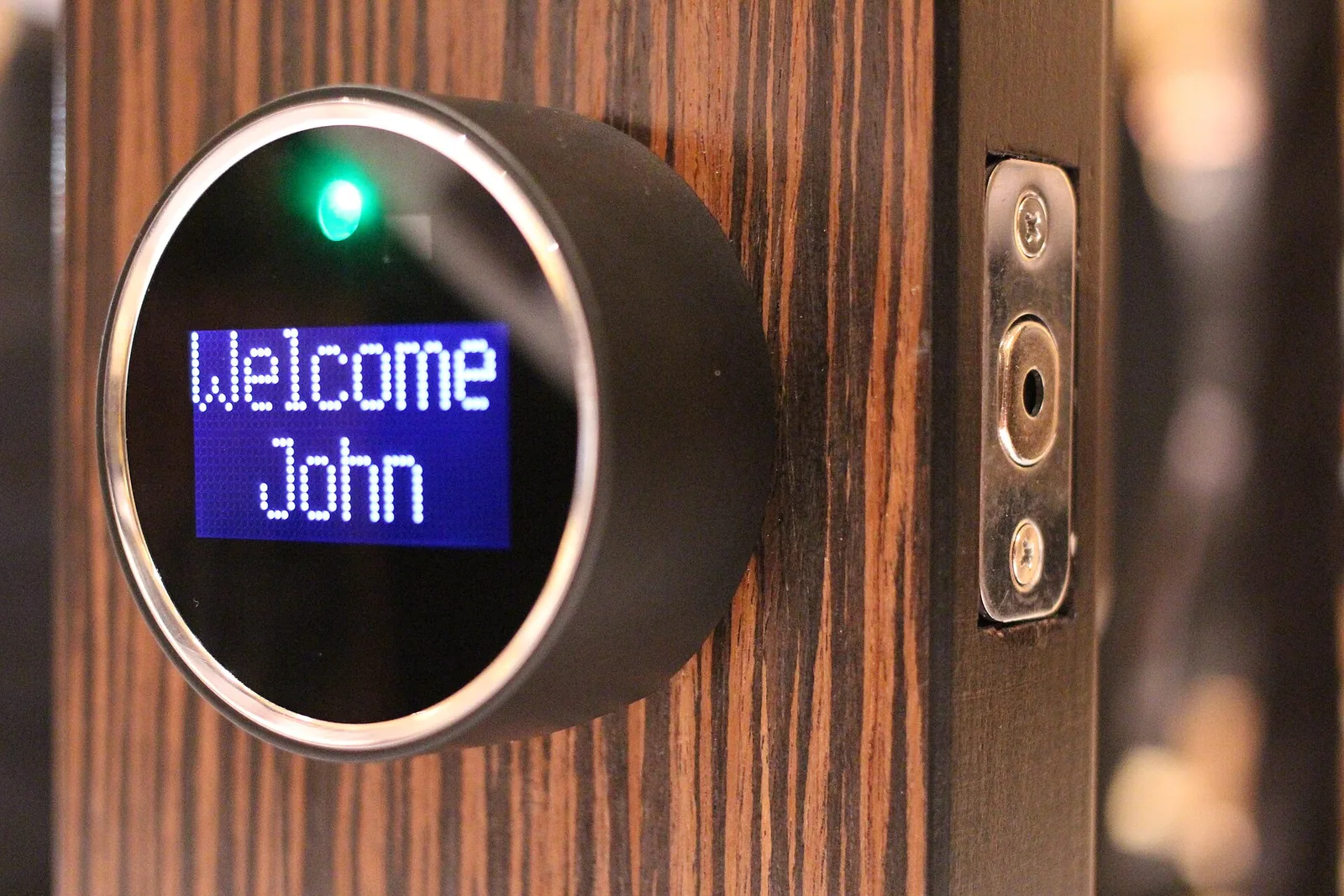
- The headline feature is a hand-crank power dial. About five to ten turns revives a dead battery; a green light means the lock is ready, and you unlock with your fingerprint, PIN, or app.
- Battery: a standard Ring battery pack, good for about a year per charge according to Siminoff — and he told GeekWire that none of the lock’s features requires a subscription.
- Connectivity is Amazon Sidewalk, not your Wi-Fi. Remote locking, status updates, and PIN syncing travel over Sidewalk; unlocking itself happens locally on the device.
- Fit and finish: replaces a standard single-cylinder deadbolt, needs no extra wiring, and comes in black, silver, and brass.
- Release date: US, early 2027 — pending FCC authorization. Ring’s product page currently shows a “Notify Me” form instead of a buy button.
- Bottom line: the best fit is someone already living in the Ring ecosystem who wants the simplest dead-battery backup in the category. Everyone else should read the comparison section before deciding to wait.
What is the Ring Smart Lock?
Strip away the marketing and the Ring Smart Lock is a straightforward proposition: a deadbolt replacement for your front door, with no keyhole, that talks to the Ring app and Alexa. It fits a standard single-cylinder deadbolt and needs no additional wiring, which means installation should be a 15-minute screwdriver job rather than a locksmith visit — though Ring hasn’t published its installation guide yet.
Day to day, you get in four ways. The fingerprint reader handles the household. The backlit touchscreen keypad covers guests, cleaners, and anyone whose fingerprint isn’t enrolled. The Ring app covers your phone. Alexa covers your voice. Through the app you can check whether the door is locked from anywhere, lock it remotely, and — the feature parents and landlords will actually use — create scheduled or time-limited access. Amazon’s example is a dog walker who can get in on Tuesdays between 2 and 3 p.m. and at no other time.
The lock also plugs into the rest of the Ring world: your Ring doorbells, cameras, alarms, and Echo devices. See someone at the door on your Ring camera, unlock it for them from the couch, and relock it when they leave — that’s the pitch, and it’s a good one for the millions of households that already run Ring doorbells.
The hand-crank dial, explained
This is the part worth paying attention to. Every smart lock has to answer the same question — what happens when the battery dies? — and every answer until now has been a compromise. Carry a backup key (Yale). Keep a charged USB-C cable somewhere you can reach from the porch (Schlage, Aqara). Hope the 9V-battery terminals are enough (older designs). All of them assume you planned ahead. Ring’s dial assumes you didn’t.
Here’s how it works, per Siminoff’s interview with GeekWire: you twist the built-in dial somewhere around five to ten times — how many depends on how far and how fast you turn it — and the motion generates enough electricity to bring the lock back to life. A light turns green when it’s ready. Then you unlock it the normal way: fingerprint, keypad code, or the Ring app.
Two important nuances. First, restoring power doesn’t grant access by itself — you still need an authorized credential, so a stranger can’t crank your lock open. Second, Ring hasn’t said how long the revived lock stays powered. Enough to get in once and replace or recharge the battery, presumably, but the exact window is unconfirmed, and nobody outside Ring has tested it hands-on yet.
On battery life generally, Siminoff told GeekWire the lock runs on a standard Ring battery pack that should last about a year under normal use, with the charge level visible in the Ring app. A year per charge is respectable — it’s in the same ballpark as the better keypad deadbolts — and it means most owners will deal with the battery roughly as often as they change smoke-detector batteries. If your current lock eats batteries faster than it should, our smart lock battery drain fixes guide covers the usual culprits while you wait for 2027.
What the lock looks like
Ring is selling the lock in three finishes — black, silver, and brass — which is a wider choice than most smart locks offer at launch. It replaces the full deadbolt rather than sitting over your existing hardware on the inside of the door, so it becomes part of your entrance’s look. The exterior unit carries the fingerprint sensor, the touchscreen keypad, and the dial; the interior side has a conventional thumbturn.
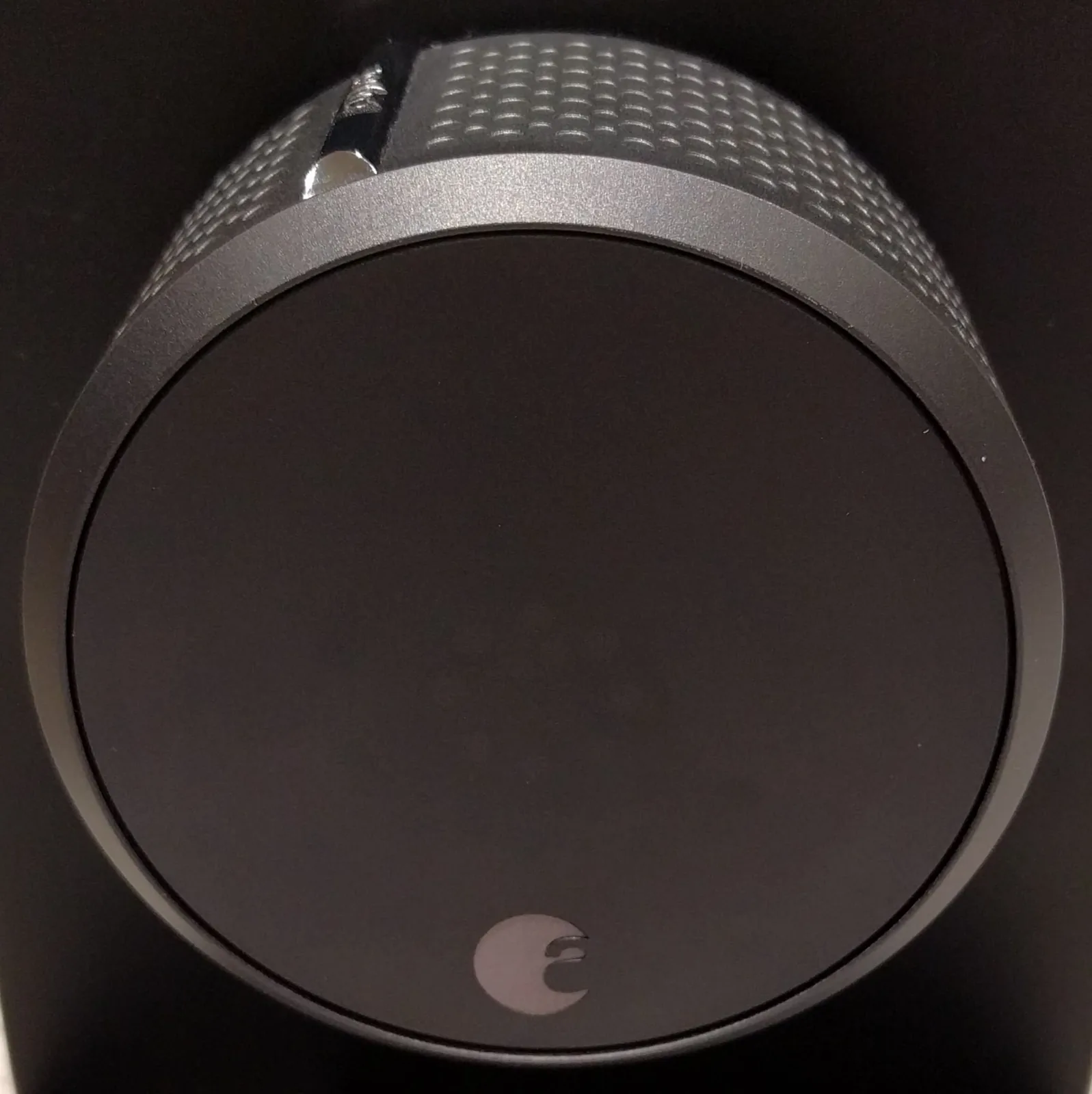
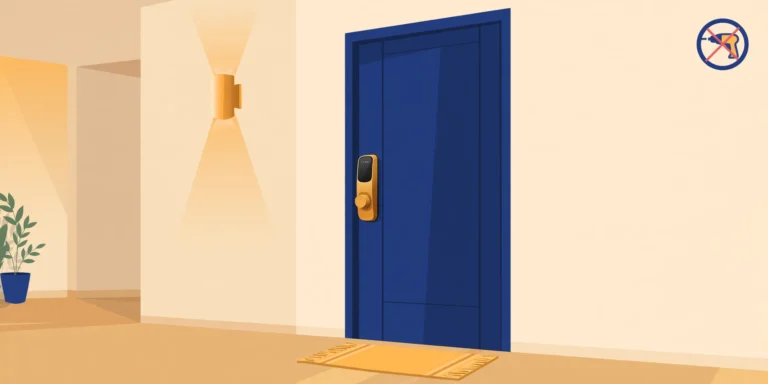
Worth noting for renters and apartment dwellers: because this is a full deadbolt replacement, it’s a homeowner product. If your lease or landlord won’t let you swap the deadbolt, Ring’s lock isn’t for you — our best smart locks for renters roundup covers the no-drilling options that leave the existing hardware untouched.
Ring Smart Lock: confirmed specs
Everything in this table is confirmed by Ring’s announcement or Siminoff’s on-the-record interview with GeekWire. Anything else lives in the “still unknown” section below.
| Feature | Ring Smart Lock (confirmed) |
|---|---|
| Announced | October 7, 2026 |
| Price | $249.99 |
| Release | US, early 2027 (Q1); FCC authorization pending |
| Entry methods | Fingerprint reader, backlit touchscreen keypad, Ring app, Alexa voice |
| Dead-battery backup | Built-in hand-turned power dial (~5–10 turns); green light = ready |
| Battery | Standard Ring battery pack; ~1 year per charge (per Siminoff) |
| Remote access | Amazon Sidewalk (not home Wi-Fi); unlocking handled locally on the device |
| Subscription | None required for any feature (per Siminoff, via GeekWire) |
| Fit | Standard single-cylinder deadbolt; no extra wiring |
| Finishes | Black, silver, brass |
| Ecosystem | Ring app, Ring doorbells/cameras/alarms, Amazon Echo/Alexa; no Matter announced |
Ring Smart Lock price and release date
The announced price is $249.99. Ring’s product page currently offers a “Notify Me” form instead of a buy button — the lock isn’t offered for sale anywhere yet. One smart-home guide also notes Ring is offering optional professional installation from $129.99 per device, which tells you Ring expects some buyers to want a pro handling the deadbolt swap.
The release date is early 2027 in the US, which Ring describes as the first quarter. Two caveats. First, FCC authorization is still pending, and regulatory clearance has a habit of moving dates — treat Q1 as Ring’s plan, not a promise. Second, reports say the launch is US-only at first, with no Canada availability announced. Nothing has been said about the UK or Europe, and given that the lock leans on Amazon Sidewalk for its remote features, international timing will depend on Sidewalk coverage in each market.
At $249.99, Ring is pricing itself squarely in the middle of the smart-lock market: more than Yale’s $177.99 Matter lock, less than Schlage’s $338.74 Sense Pro, and a touch under Aqara’s $269.99 U400. That’s deliberate. Ring isn’t trying to be the cheapest or the most premium — it’s trying to be the obvious pick for its own enormous installed base of doorbell and camera owners.
The Sidewalk question: what works without your Wi-Fi
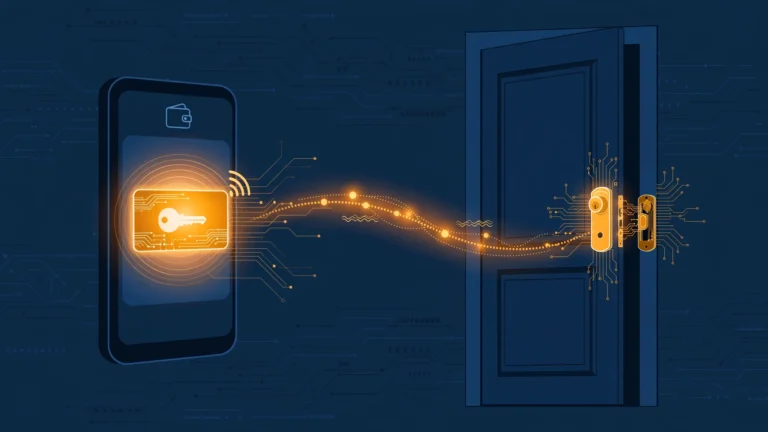
Here’s the technical detail that will matter most in daily use. The Ring Smart Lock does not use your home Wi-Fi. Remote locking, status updates, and PIN syncing all travel over Amazon Sidewalk — Amazon’s shared neighborhood network, powered by nearby Echo and Ring devices. Unlocking itself happens locally on the lock, so getting in never depends on a network connection at all.
That’s a genuinely good design split. The thing you need most urgently — getting through your own front door — can’t be broken by a router reboot. But the remote half of the story comes with an asterisk: both Amazon and Ring say Sidewalk coverage “may vary by location and is subject to change or interruption.” If your street has few Amazon devices around, or there’s a neighborhood power outage, remote features may not be there when you want them. For more on how locks behave when the network drops, see our guide on whether smart locks work without Wi-Fi.

The other half of the connectivity story is what’s missing: Matter. Ring hasn’t announced Matter support, and the lock’s Sidewalk-based design points away from it. That means no native Google Home or Apple Home integration at launch — it’s an Alexa and Ring-ecosystem product, full stop. If your household runs on Google Home or HomeKit, that alone may settle the decision. Our Matter explainer covers why that standard matters and which locks support it.
Ring Smart Lock vs Yale, Schlage, and Aqara
Ring is entering a market with established answers to every question it’s asking. An honest comparison has to give credit where it’s due — and Ring’s rivals have real advantages.
Yale Smart Lock with Matter ($177.99) is the value pick and the Google Home pick. It keeps a physical keyway, so a dead set of its four AA batteries is a non-event if you carry the key. It integrates with Google Home for guest codes and remote checks. The trade-offs: no fingerprint reader, and you’ll likely need a Matter hub and Thread border router (a second-gen Nest Hub or Google TV Streamer, for example) if you don’t already own one.
Schlage Sense Pro ($338.74) is the Apple-household pick. No keyway, but a USB-C port supplies emergency power when the batteries die flat — which shifts your emergency kit from a spare key to a charged cable you can actually reach. You get Apple home key, hands-free UWB entry with a compatible iPhone or Apple Watch, a keypad, and Matter over Thread. It’s the most expensive of the four and the most Apple-centric.
Aqara Smart Lock U400 ($269.99) is the belt-and-suspenders pick. It keeps the mechanical key and adds the USB-C emergency port, plus fingerprint and keypad entry, Matter over Thread, Apple home key, and UWB hands-free entry. It’s the most versatile lock here — and only $20 more than Ring’s announced price. Its remote features need a compatible controller, and a few Aqara-specific functions want an Aqara Thread controller.
Ring ($249.99, early 2027) has the simplest dead-battery story in the category — the backup is built into the door, nothing to carry, nothing to find. But it’s also the only one with no physical fallback at all if the dial mechanism itself ever fails, the only one without Matter, the only one you can’t buy for months, and the only one limited to a single ecosystem. Apple is also preparing its own answer: GeekWire reports a $349.95 LG deadbolt with UWB auto-unlock as part of Apple’s new smart-home push. Our UWB and Aliro smart lock explainer covers how that hands-free tech works.
| Lock | Price* | Dead-battery backup | Entry methods | Smart home | Best for |
|---|---|---|---|---|---|
| Ring Smart Lock | $249.99 | Hand-crank dial (~5–10 turns) | Fingerprint, touchscreen keypad, app, Alexa | Alexa, Ring ecosystem; no Matter announced | Ring households; simplest backup story |
| Yale YRD510 (Matter) | $177.99 | Physical key | Keypad, app, key | Google Home via Matter (hub needed) | Google Home homes on a budget |
| Schlage Sense Pro | $338.74 | USB-C emergency power | Apple home key, UWB, keypad, app | Apple Home, Matter over Thread | Apple households wanting keyless |
| Aqara U400 | $269.99 | Key + USB-C port | Fingerprint, keypad, Apple home key, UWB, key | Matter over Thread; Google/Apple | Maximum fallback options |
*Competitor prices checked October 11, 2026, via The Gadgeteer. Ring’s price is its announced price; the lock isn’t on sale yet.
Should you wait for the Ring Smart Lock?
Wait for it if you’re already deep in the Ring ecosystem — a Ring doorbell on the frame, cameras around the house, Echo devices inside. For you, the lock completes a system you already own and trust, the dial removes the one anxiety every smart lock creates, and $249.99 is fair for a fingerprint deadbolt with no subscription. Ring’s subscription story is worth understanding before you buy in further — our Ring without a subscription guide and Ring vs Nest doorbell battery comparison lay out the real costs.
Don’t wait if you need a lock now — early 2027 is months away and FCC timing could slip it further. Don’t wait if you’re a renter who can’t replace the deadbolt; the renter-friendly smart locks that fit over existing hardware are the better answer. Don’t wait if your home runs on Google Home or Apple HomeKit — Yale and Aqara’s Matter support matters more than a clever dial. And if your door is metal, check fit carefully before any deadbolt swap; our metal door installation guide covers the gotchas. For the Ring-curious who want the ecosystem math, our Arlo vs Ring subscription cost breakdown shows what Ring ownership really costs over time.
What’s still unknown
- How long the cranked power lasts. Ring hasn’t said how long the lock stays alive after those five to ten turns — long enough to get in and swap the battery, presumably, but the exact window is unconfirmed.
- Whether the date holds. FCC authorization is pending, and “early 2027” is a plan, not a ship date.
- International availability. US-only at launch per reports; nothing announced for Canada, the UK, or Europe.
- The fine print on “no subscription”. Siminoff told GeekWire no feature requires a subscription — but launch-day terms, warranty details, and the full privacy story will only be clear when retail documentation lands.
Frequently asked questions
When is the Ring Smart Lock release date?
Ring plans a US release in early 2027 — the first quarter. FCC authorization is still pending, so treat that as Ring’s plan rather than a guaranteed ship date. The lock isn’t offered for sale anywhere yet; Ring’s product page currently shows a “Notify Me” form.
How much will the Ring Smart Lock cost?
The announced price is $249.99, in black, silver, or brass. Ring is also reportedly offering optional professional installation from $129.99 per device. That positions it between Yale’s $177.99 Matter lock and Schlage’s $338.74 Sense Pro.
How does the hand-crank dial work?
If the battery dies, you twist the built-in dial about five to ten times — the exact count depends on how far and how fast you turn it. The motion generates enough electricity to power the lock back up; a green light tells you it’s ready. Then you unlock it normally with your fingerprint, keypad code, or the Ring app. Cranking restores power but doesn’t grant access on its own — you still need an authorized credential.
Does the Ring Smart Lock need Wi-Fi or a subscription?
Neither, in the ways that matter most. The lock doesn’t use your home Wi-Fi at all — remote locking, status updates, and PIN syncing run over Amazon Sidewalk, and unlocking happens locally on the device. And Ring founder Jamie Siminoff told GeekWire that none of the lock’s features requires a subscription. Note that remote features depend on Sidewalk coverage where you live, which Amazon says may vary.
Does the Ring Smart Lock work with Matter, Google Home, or Apple HomeKit?
No Matter support has been announced — the lock is an Alexa and Ring-ecosystem product. If your household runs on Google Home or Apple HomeKit, Yale’s Matter lock or Aqara’s U400 are the better-documented choices today.
Should I wait for the Ring Smart Lock or buy a Yale, Schlage, or Aqara now?
If you’re already in the Ring ecosystem and can wait until 2027, Ring’s dial is the simplest dead-battery answer in the category and the price is fair. If you need a lock now, run Google Home or Apple Home, or rent and can’t replace the deadbolt, buy the competitor that fits your home today — Aqara’s U400 is the most versatile of the three, Yale’s is the cheapest, and Schlage’s is the pick for Apple households.
Sources
- 9to5Mac (Oct 7, 2026) — Ring announces its first smart lock; fingerprint, touchscreen keypad, Ring app; remote locking and scheduled unlocks; black/silver/brass; no extra wiring; early 2027; $249
- GeekWire (Oct 7, 2026) — interview with founder Jamie Siminoff: five to ten dial turns, green light indicator; Ring battery pack ~1 year per charge; no subscription required for any feature; Sidewalk connectivity; Q1 2027 ship target; Apple/LG $349.95 UWB deadbolt context
- The Gadgeteer (Oct 11, 2026) — four-way backup comparison; Ring $249.99, US early 2027, FCC pending, not for sale; Sidewalk for remote features; Yale $177.99, Schlage $338.74, Aqara $269.99 (prices checked Oct 11)
- MikeShouts (Oct 17, 2026) — four entry methods; Sidewalk remote features; standard single-cylinder deadbolt fit; early 2027; $249.99; black, silver, brass
- TechRepublic (Oct 9, 2026) — corroborates dial details, dog-walker time-window example, Sidewalk remote features, finishes
- LocalSmartHomeGuide (updated Oct 14, 2026) — “Notify Me” form on Ring’s page; optional professional installation from $129.99/device; US-only at launch per reports
Our take going forward: this page will stay updated as Ring confirms the ship date, publishes its installation guide, and releases the lock. When it launches, we’ll publish a full hands-on review and buying guide — with purchase links once they’re live. Until then, everything above is what’s been announced and reported, nothing more.


3 Comments